
Feeding your chickens: a complete guide for healthy and abundant eggs
By La Rédaction — Ma Petite Ferme · 02/08/2026
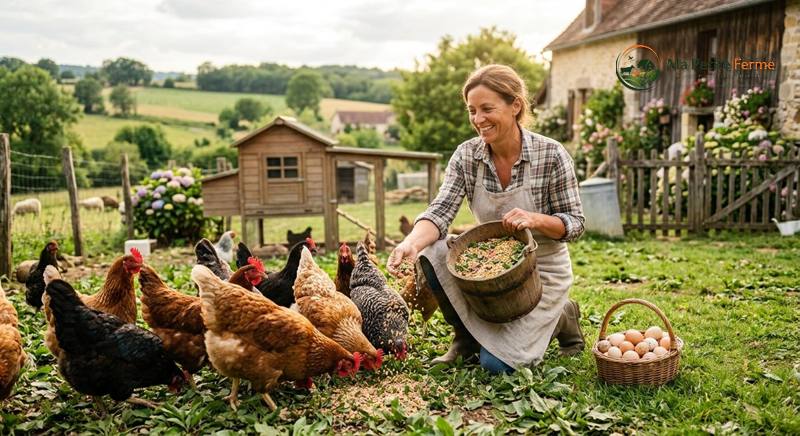
Why is hen feeding so important?
A well-fed hen is a productive and healthy hen. Feed accounts for up to 70% of the production cost in poultry farming, but it is also the most powerful lever for ensuring quality eggs, good shell strength, and consistent laying. As a small-scale producer, understanding the nutritional needs of your poultry will enable you to make informed, cost-effective, and animal-friendly choices.
The essential nutritional needs of the laying hen
An adult laying hen requires a daily balanced intake of proteins, carbohydrates, fats, vitamins, and minerals. Proteins (between 15 and 18% of the ration) are essential for the formation of egg white. Calcium, meanwhile, is the key nutrient for shell strength: it should amount to approximately 4 g per day per hen. You can provide it through crushed oyster shells or ground, dried eggshells. Phosphorus and vitamin D complete this fundamental mineral trio.
The foundation of feeding: grains and complete feeds
Corn, wheat, barley, and sunflower form the traditional basis of hen feeding. A grain mixture distributed morning and evening is sufficient to cover a large portion of their energy needs. For short-supply-chain farms, commercially available complete feeds can be a good supplement or a practical alternative, especially in winter or when pasture is scarce. Be sure to choose non-GMO feeds if you wish to add value to your production through direct sales.
Natural supplements not to be overlooked
Hens are opportunistic omnivores: they love earthworms, insects, fresh grass, and leftover garden vegetables. These natural supplements enrich their diet with proteins, fiber, and micronutrients. Vegetable peelings (without salt or seasoning), wilted lettuce, zucchini, or grated carrots are greatly appreciated. Avoid, however, citrus fruits, raw onions, avocado, and any fermented or moldy food that could harm their digestive health.
Water, an often underestimated nutrient
A hen consumes between 200 and 300 ml of water per day, and even more in summer or during periods of intense laying. Fresh, clean water, renewed daily, is absolutely essential. A lack of water, even temporary, can cause a sudden drop in egg production. Remember to check your waterers every morning and clean them regularly to prevent the growth of algae or bacteria.
Adapting the ration according to seasons and physiological stages
Hens' needs vary according to the seasons and their stage of life. In winter, slightly increase the proportion of grains to help your animals maintain their body temperature. During the molting period, enrich the ration with proteins to encourage feather regrowth. Growing pullets have different needs than adult laying hens: opt for a "starter" feed, then a "grower" feed, before transitioning to a "layer" feed. A diet tailored to each stage is the key to a healthy and profitable flock.
Related articles — Feeding your chickens: a complete guide for healthy and abundant eggs
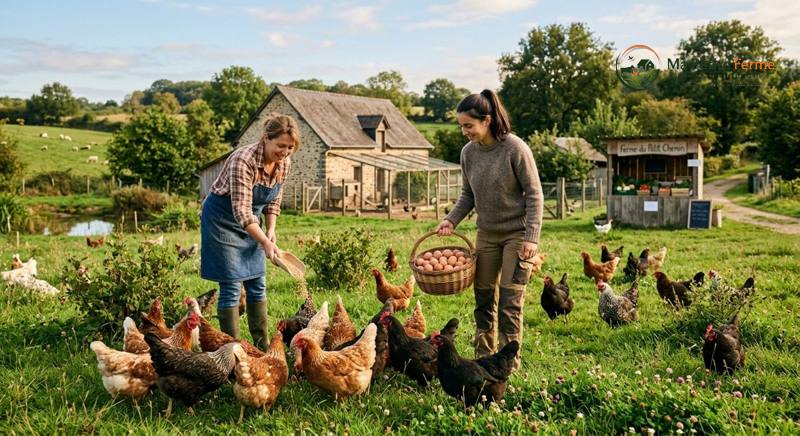
Free-range laying hens: the method winning over short supply chain buyers
Discover why raising your laying hens free-range boosts your short supply chain sales and builds lasting loyalty among your local customers.
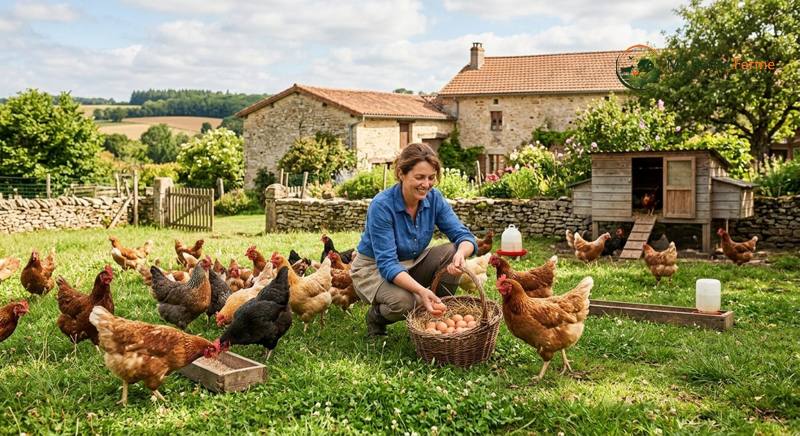
Free-range laying hen farming: benefits, challenges and practical tips
Discover how to succeed in free-range laying hen farming: animal welfare, egg quality and concrete advice for small-scale producers.
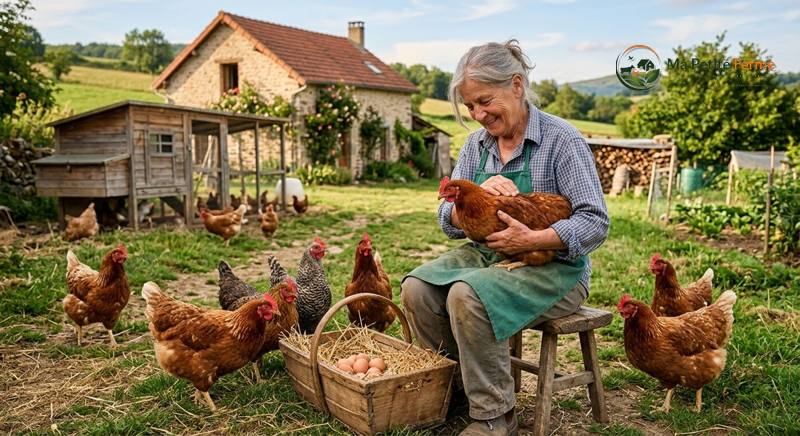
Spent laying hens: should you keep them or sell them?
When a hen lays less, should you cull her, keep her, or sell her? Find out how to make the best decision for your farm.
Farms in our network — Feeding your chickens: a complete guide for healthy and abundant eggs
Get our tips by email
Livestock, production and short-circuit selling — our best tips, no spam.