
Hen laying: everything you need to know to maximize egg production on the farm
By La Rédaction — Ma Petite Ferme · 02/08/2026
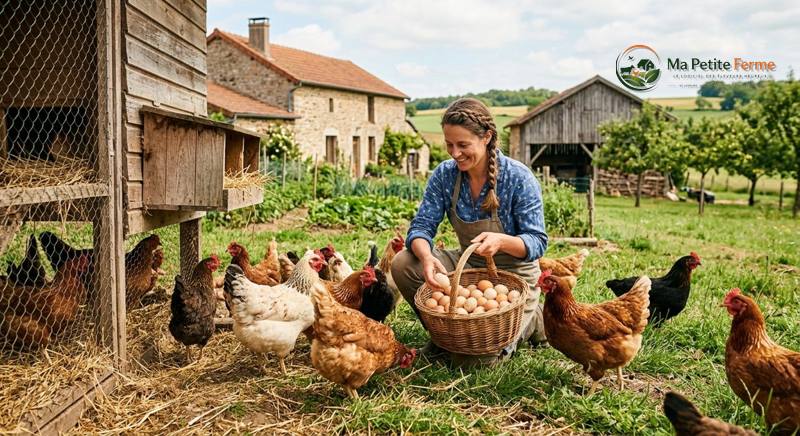
Understanding the Laying Cycle of Hens
Hen laying is a fascinating natural phenomenon, directly linked to the hen's physiology and her environment. A hen begins to lay between 18 and 22 weeks depending on the breed, and can produce an average of 250 to 300 eggs per year under good conditions. Each egg takes approximately 24 to 26 hours to form in the reproductive tract before being laid. Once this period has passed, the cycle begins again, which explains why a hen in peak condition lays almost one egg per day.
The Key Factors That Influence Laying
Several elements play a determining role in the quality and regularity of laying. Light is arguably the most important factor: hens need approximately 14 to 16 hours of light per day to maintain optimal production. In winter, the natural decrease in daylight often leads to a significant drop in laying. Small-scale farmers can compensate for this by installing soft artificial lighting in the henhouse, while respecting the rest periods that are essential to the animals' health.
Nutrition is the second pillar of good laying. A balanced diet, rich in protein, calcium, and vitamins, is essential. Calcium is particularly crucial: it makes up the eggshell. Offer your hens crushed oyster shells or ground eggshells on a free-access basis. A calcium deficiency quickly results in thin shells or eggs laid without a shell.
Animal Welfare: An Investment in Your Production
Stressed hens lay less — this is a reality that every farmer quickly comes to observe. Make sure your henhouse provides enough space (a minimum of 4 hens per square metre indoors), suitable perches, and comfortable, clean, and dark nesting boxes. Hens like to lay in a quiet, secluded spot. Plan for one nesting box for every four to five hens and line it with fresh straw that is regularly renewed. Access to an outdoor run also improves overall well-being and, consequently, the regularity of laying.
Signs of a Drop in Laying and How to Address It
A sudden drop in laying can have several causes: the annual moult (a period during which hens lose their feathers and temporarily stop laying), illness, a nocturnal predator disturbing the animals, or a sudden change in feed ration. Observe your hens daily to quickly detect any abnormal signs. In the event of a moult, be patient and enrich the diet with protein to speed up feather regrowth.
Marketing Your Eggs Through Direct Sales
If you raise your hens free-range or using organic farming methods, you have a valuable selling point with local consumers. Farm-fresh eggs stand out for their bright orange yolk, a sign of a natural and varied diet. Offer them at markets, at farm shops, or through short supply chain baskets. An attractive presentation and careful labelling mentioning the laying date and farming method strengthen your customers' trust and build customer loyalty.
Related articles — Hen laying: everything you need to know to maximize egg production on the farm
How to Get Hens to Lay Eggs: Our Tips to Optimize Egg Production
Discover the best practices to stimulate your hens' laying and maximize your egg production on the farm.
Which laying hen breed should you choose to maximize production?
Discover the best laying hen breeds to optimize your egg production in farm poultry keeping and make the right choices for your situation.
Spent laying hens: should you keep them or sell them?
When a hen lays less, should you cull her, keep her, or sell her? Find out how to make the best decision for your farm.
Farms in our network — Hen laying: everything you need to know to maximize egg production on the farm

Get our tips by email
Livestock, production and short-circuit selling — our best tips, no spam.