
Feeding Laying Hens Properly: The Complete Guide to Quality Eggs
By La Rédaction — Ma Petite Ferme · 02/08/2026
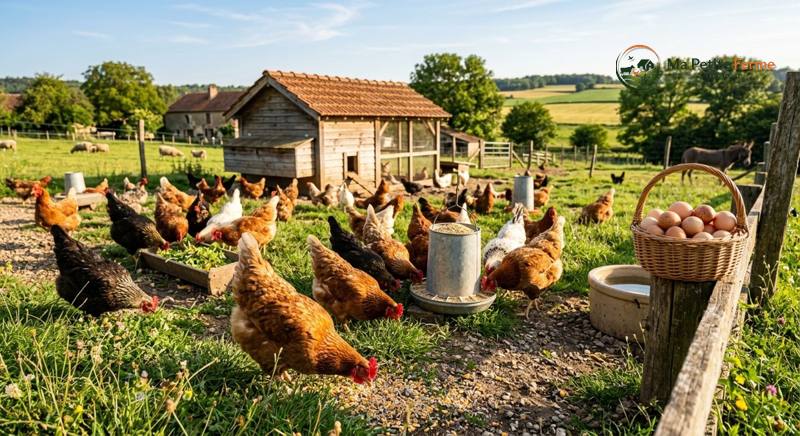
Why is laying hen nutrition so important?
The quality and quantity of eggs you collect each morning largely depend on what your hens eat. A balanced diet not only ensures regular laying, but also eggs with richly coloured yolks, firm shells and incomparable flavour. For a small producer selling through short supply chains, this is a major selling point with your loyal customers.
The essential nutritional needs of laying hens
An adult laying hen needs a daily balanced intake of proteins, carbohydrates, fats, vitamins and minerals. Proteins (between 15 and 18% of the ration) are essential for the formation of egg whites. Calcium, meanwhile, is the key mineral for shell strength: always make sure crushed oyster shells or recycled and ground eggshells are available. Phosphorus and vitamins D, A and E complete this essential nutritional picture.
What to feed your laying hens on a daily basis?
The foundation of a laying hen's diet is whole grain or a commercially available complete feed specially formulated for layers. You can offer a mixture of wheat, cracked corn, barley and sunflower seeds, supplemented with a protein concentrate. If you prefer a more natural and economical approach, leftover garden vegetables (peelings, cabbage leaves, courgettes), earthworms, insects and fresh herbs provide valuable nutrients while enriching the yolk with omega-3 fatty acids and carotenoids.
Be careful, however, never to give fermented foods, excess salt, onions or citrus fruits, as these can disrupt laying and harm the health of your flock.
Quantities and meal frequency
On average, a laying hen consumes between 120 and 150 grams of feed per day. It is advisable to distribute food twice a day: in the morning at sunrise and in the late afternoon. This routine reassures the animals and stimulates their natural activity. Access to fresh, clean water must be constant: a hen drinks between 200 and 300 ml of water per day, especially during hot weather or periods of heavy laying.
Little extras to naturally boost egg production
A few simple tips make all the difference. Regularly offer sprouted seeds, rich in enzymes and living vitamins. In winter, a little whole corn in the evening helps hens maintain their body temperature. Dried nettles, sprinkled over the ration, are true natural laying boosters thanks to their richness in iron and chlorophyll. Finally, let your hens access a grassy range: fresh air and dietary diversity are the best allies of abundant laying and farm-quality eggs recognised by your customers.
Related articles — Feeding Laying Hens Properly: The Complete Guide to Quality Eggs
Spent laying hens: everything you need to know before buying
Buying spent laying hens can be a great deal… if you know what you're doing. Discover our tips before you take the plunge.
Laying Hens: The Best Breeds for Profitable Short Supply Chain Farming
Discover which laying hen breeds to choose to maximize your egg production and attract customers through direct sales.
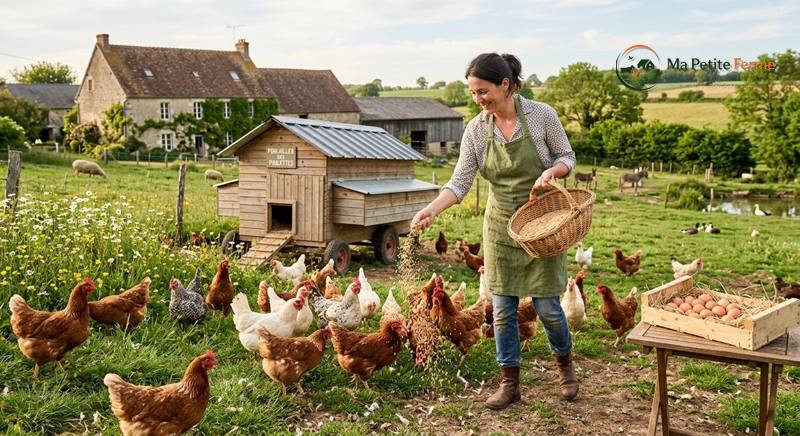
Free-range laying hen farming: what does it really cost?
Discover the real cost of free-range laying hen farming: investments, ongoing expenses and return on investment for small-scale producers.
Farms in our network — Feeding Laying Hens Properly: The Complete Guide to Quality Eggs


Get our tips by email
Livestock, production and short-circuit selling — our best tips, no spam.