Feeding chickens: a complete guide for tasty eggs and healthy hens
By La Rédaction — Ma Petite Ferme · 02/08/2026
Why is hen feeding so important?
The quality of your hens' diet has a direct impact on their health, their well-being, and of course on the flavor and nutritional value of your eggs. As a small producer, you have the advantage of having full control over what your poultry eats, which represents a real asset to highlight with your direct-sale customers.
The essential nutritional needs of laying hens
A laying hen needs a balanced intake of proteins, carbohydrates, fats, minerals, and vitamins. Proteins are essential for egg formation, particularly the egg white. Calcium, meanwhile, is crucial for shell strength. Make sure to provide crushed oyster shells or recycled eggshells. Fresh, clean water remains the absolute foundation: a hen drinks between 200 and 300 ml per day, and even more during hot weather.
Basic feed: grains and pellets
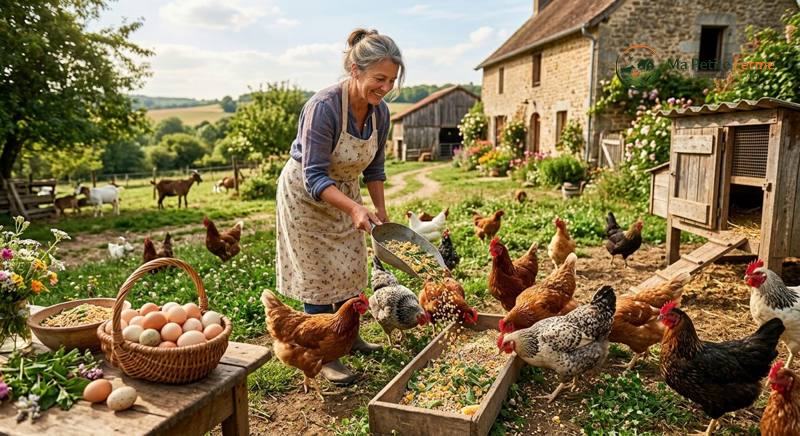
The daily ration for an adult hen is around 120 to 150 grams of feed per day. Grains such as wheat, corn, or barley make an excellent energy base. Complete layer pellets, available from your agricultural cooperative, provide a balanced and convenient ration. You can combine both by distributing pellets in the morning and whole grains at the end of the day, which also encourages the hens' natural activity.
Natural supplements to enrich the diet
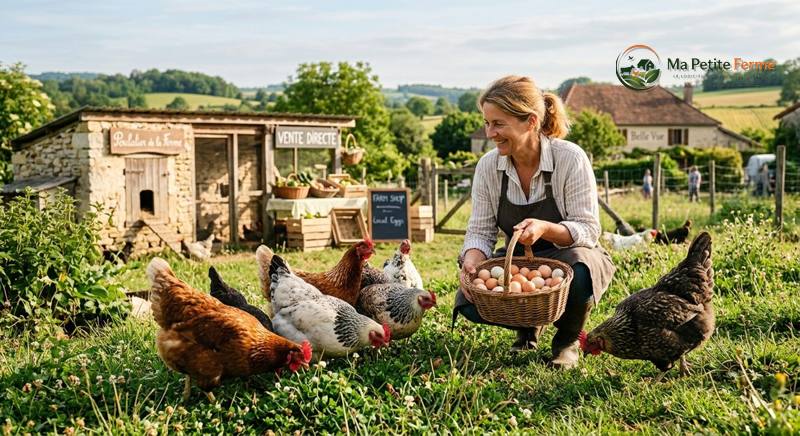
Leftover vegetables from the garden, raw vegetable peelings, fresh herbs, and earthworms are all excellent natural supplements that your hens will love. Free-range grazing on a meadow or orchard allows them to peck at insects, wild seeds, and grass, which naturally enriches their eggs with omega-3 fatty acids and vitamins. Be careful, however, to avoid certain toxic foods such as avocado, large quantities of onion, citrus fruits, or raw potatoes.
Adapting the diet according to the seasons
In winter, when grazing is limited, consider slightly increasing the grain ration to compensate for the energy expenditure caused by the cold. You can also distribute cabbage, squash, or fodder beets to provide vitamins. In summer, make sure your hens always have fresh water available and favor distributing feed early in the morning to prevent fermentation.
Promoting your healthy feeding practices in direct sales
A carefully planned diet, made up of local grains, pasture grazing, and natural supplements, is a strong selling point for your customers. Don't hesitate to communicate about how you feed your hens on your labels, your Facebook page, or at your markets. Consumers are increasingly sensitive to traceability and animal welfare: turn your commitment to quality into a true mark of trust.
Related articles — Feeding chickens: a complete guide for tasty eggs and healthy hens
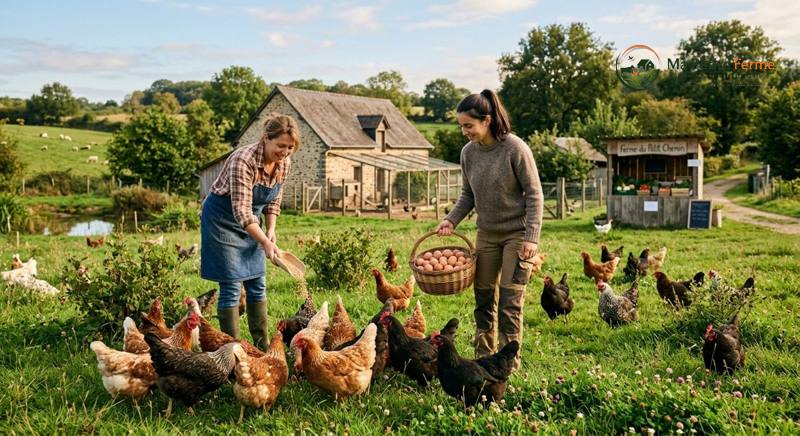
Free-range laying hens: the method winning over short supply chain buyers
Discover why raising your laying hens free-range boosts your short supply chain sales and builds lasting loyalty among your local customers.
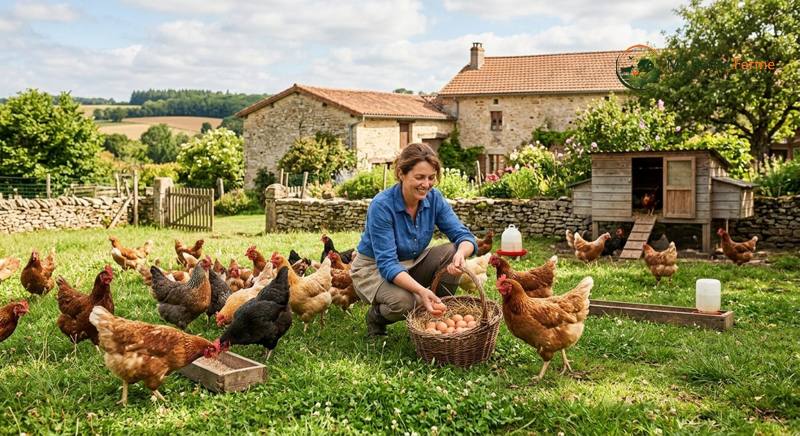
Free-range laying hen farming: benefits, challenges and practical tips
Discover how to succeed in free-range laying hen farming: animal welfare, egg quality and concrete advice for small-scale producers.
Laying Hens: The Best Breeds for Profitable Short Supply Chain Farming
Discover which laying hen breeds to choose to maximize your egg production and attract customers through direct sales.
Farms in our network — Feeding chickens: a complete guide for tasty eggs and healthy hens
Get our tips by email
Livestock, production and short-circuit selling — our best tips, no spam.