
How to feed your laying hens properly: practical tips for successful poultry keeping
By La Rédaction — Ma Petite Ferme · 02/08/2026
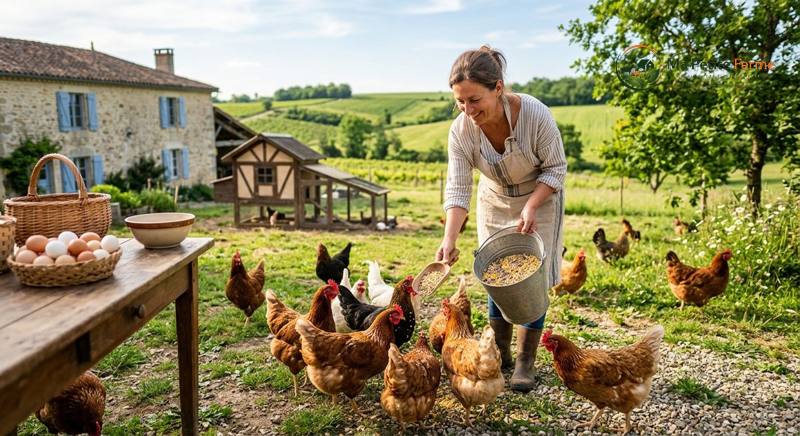
Feeding chickens: the foundation of healthy poultry keeping
Feeding your chickens well is the first requirement for obtaining quality eggs and maintaining a healthy flock. A balanced diet directly influences the shell, the yolk, and the frequency of laying. Whether you have a few chickens in your garden or a small farm operation, understanding the nutritional needs of your poultry is essential.
The essential nutritional needs of laying hens
A laying hen needs approximately 120 to 130 grams of complete feed per day. Her diet must cover several fundamental needs: proteins for egg formation, calcium to strengthen the shell, carbohydrates for energy, and vitamins for immunity. Be sure to always make crushed oyster shells or limestone available, as these are indispensable sources of calcium for a good shell.
What food to give your chickens on a daily basis?
The basis of their diet can be a complete layer mash, available in pellet or flour form, specifically formulated to cover all necessary nutritional requirements. In addition, you can distribute whole grains such as wheat, corn, or barley, ideally in the evening to promote overnight digestion and maintain body heat. Leftover vegetables from the garden, cooked peelings, lettuce, or fresh herbs are also welcome, in moderation. However, avoid salty or sugary foods, avocados, onions, or citrus fruits, which can be toxic or disrupt digestion.
Water: an often overlooked nutrient
Permanent access to clean, fresh water is just as crucial as food. A hen consumes between 200 and 300 ml of water per day, more during periods of intense heat. Even mild dehydration can quickly cause egg production to drop. Clean the drinkers regularly to prevent the growth of bacteria and unwanted algae.
Pasture and natural feeding: an asset for quality
If your chickens have access to a grassy range, they will naturally supplement their ration with insects, earthworms, wild seeds, and fresh grass. This grazing enriches their diet with omega-3 fatty acids and vitamins, which is directly reflected in the color and taste of the egg yolk. This is a valuable selling point if you sell your eggs through short supply chains: your customers will appreciate eggs with a deep orange yolk, a sign of a natural and varied diet.
Adapting feeding according to the seasons
In winter, chickens expend more energy to keep warm: slightly increase the proportion of grains. In summer, favor feeding early in the morning and in the evening to prevent food from fermenting in the heat. During molting, boost protein intake to support feather regrowth and prepare for the resumption of laying. A well-adjusted diet throughout the year is the guarantee of a productive flock and thriving chickens.
Related articles — How to feed your laying hens properly: practical tips for successful poultry keeping
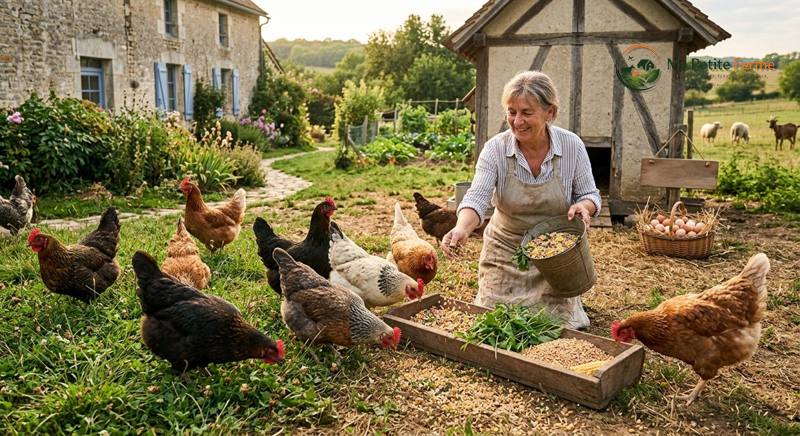
What do laying hens eat? The ideal diet for quality eggs
Discover how to properly feed your laying hens to obtain tasty eggs in large quantities, thanks to a balanced diet.
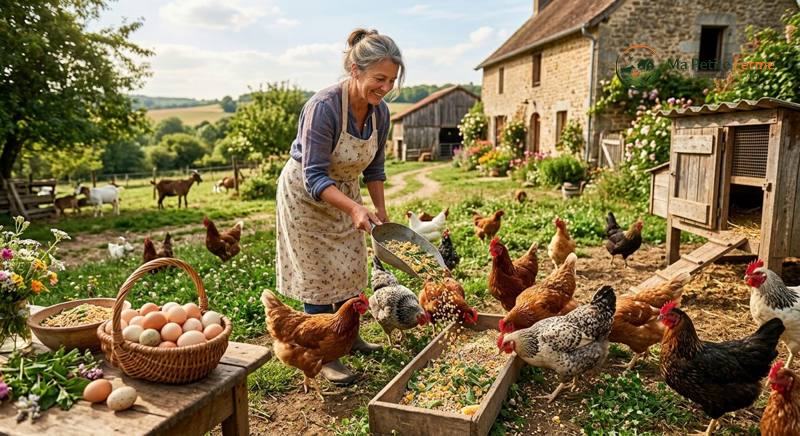
Feeding chickens: a complete guide for tasty eggs and healthy hens
Discover how to properly feed your chickens to optimize their health, egg-laying and the quality of your eggs in short supply chains.
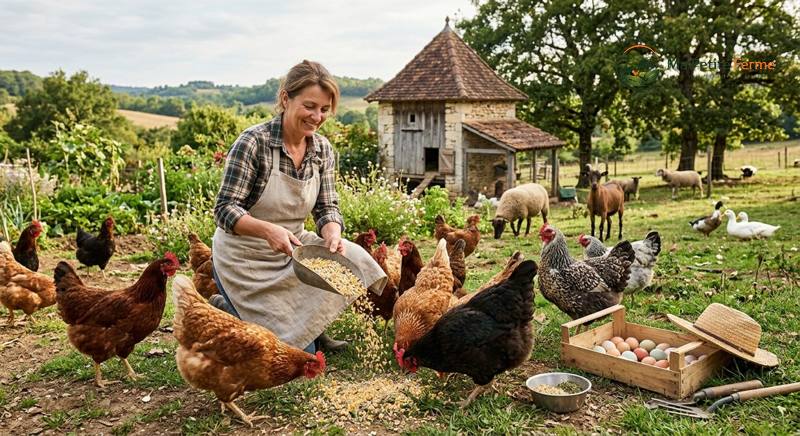
Which vitamins should you give your hens to boost egg laying?
Discover the essential vitamins to stimulate egg laying in your hens and get an abundance of eggs all year round.
Farms in our network — How to feed your laying hens properly: practical tips for successful poultry keeping

Get our tips by email
Livestock, production and short-circuit selling — our best tips, no spam.