
How to Get a Hen to Lay Eggs Quickly: Our Breeder's Tips
By La Rédaction — Ma Petite Ferme · 02/08/2026
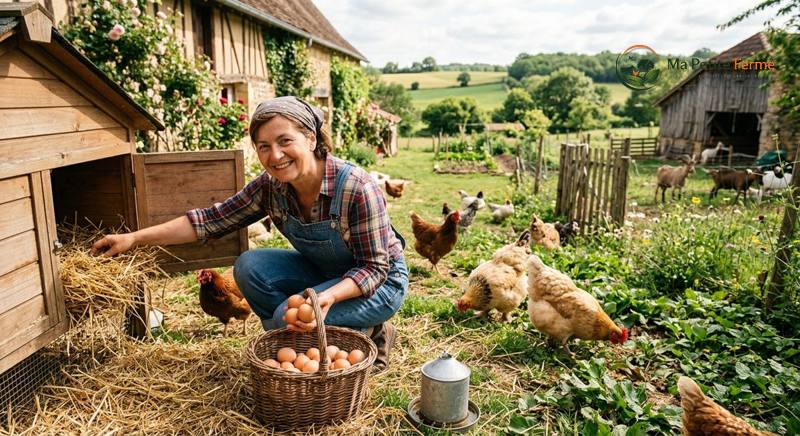
Understanding the natural laying cycle of hens
Before trying to boost egg production, it is essential to understand how your hen works. A hen begins to lay between 18 and 22 weeks of age depending on the breed. Her production is directly linked to daylight, diet, and stress levels. On average, a healthy laying hen can produce between 250 and 300 eggs per year. Knowing these basics will allow you to effectively act on the right levers.
Optimizing lighting in the henhouse
Light is the number one factor that triggers and regulates laying. A hen needs approximately 14 to 16 hours of light per day to maintain optimal production. In winter or during short days, install a low-energy bulb in the henhouse to supplement natural light. Turn it on early in the morning rather than in the evening: this better respects the biological rhythm of your poultry and avoids unnecessary stress. Gradually increase the lighting duration, in increments of 30 minutes per week, so as not to disturb your hens.
Taking care of nutrition to stimulate laying
Good nutrition is the key to abundant and regular egg production. Give your hens a complete feed specially formulated for layers, rich in protein (a minimum of 16 to 18%) and calcium. Calcium is essential for shell formation: make sure to provide crushed oyster shells or recycled eggshells as a free-choice supplement. Round out their diet with fresh vegetables, mealworms, or dried insects to provide additional nutrients and enrich the daily lives of your poultry. Also make sure that fresh water is available at all times: a dehydrated hen will quickly stop laying.
Reducing stress in the henhouse
Stress is the direct enemy of egg laying. A stressed hen will slow down or completely stop her production. Make sure the stocking density in the henhouse is respected: allow a minimum of 3 m² of outdoor space per hen and 0.3 m² of indoor space. Avoid sudden changes in routine, predator intrusions, or repeated loud noises. If you introduce new hens to the flock, do so gradually to limit hierarchical conflicts. A clean, well-ventilated, and secure henhouse is the foundation of a calm and productive flock.
Choosing the right laying breeds
If you are starting or renewing your flock, the choice of breed is crucial. Some breeds are true egg-laying machines: the White Leghorn, the Sussex, the Rhode Island Red, and the Isa Brown are all renowned for their excellent productivity. If you are raising hens for direct sales, also consider hardy breeds that cope well with outdoor conditions and require less intensive care. A healthy hen, well adapted to your environment, will naturally lay more quickly and for longer.
Regular monitoring for lasting results
Record the number of eggs collected each day to quickly detect any drop in production. Rigorous monitoring allows you to identify the causes of a slowdown and take action without delay. Also remember to deworm your hens and treat them regularly against red mites: these parasites exhaust your hens and cause a significant drop in laying. With consistency and careful observation, you will achieve healthy, abundant, and profitable egg production for your farm.
Related articles — How to Get a Hen to Lay Eggs Quickly: Our Breeder's Tips
How to Get Hens to Lay Eggs: Our Tips to Optimize Egg Production
Discover the best practices to stimulate your hens' laying and maximize your egg production on the farm.
Hen laying: everything you need to know to maximize egg production on the farm
Discover how to optimize your hens' laying with our practical tips on nutrition, lighting, and animal welfare.
Spent laying hens: should you keep them or sell them?
When a hen lays less, should you cull her, keep her, or sell her? Find out how to make the best decision for your farm.
Farms in our network — How to Get a Hen to Lay Eggs Quickly: Our Breeder's Tips

Get our tips by email
Livestock, production and short-circuit selling — our best tips, no spam.