
Spent laying hens: everything you need to know before buying
By La Rédaction — Ma Petite Ferme · 09/09/2026
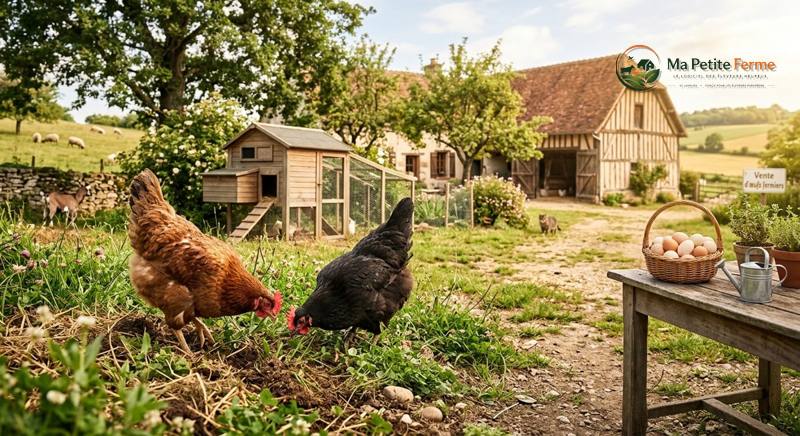
What is a spent laying hen?
A spent laying hen is a hen that has completed its intensive production period in a professional farming operation. Generally, it is culled after 12 to 18 months of laying, when its egg output begins to naturally decline. These hens are then passed on — often at a low price — to private individuals or small producers who wish to build up a flock without too much investment.
What are the advantages of buying spent hens?
The first advantage, and by no means the least, is the price. A spent hen typically costs between 2 and 5 euros per bird, compared to 10 to 20 euros for a point-of-lay pullet from a specialist breeder. It is therefore an economical solution for starting or expanding your flock. Furthermore, these hens are already adult and mature: there is no need to wait several months before getting the first eggs. They can also play a valuable role in the garden by scratching the soil and consuming harmful insects.
What you need to know before buying
Be careful, however, not to get carried away by enthusiasm. A spent hen has often lived in an environment very different from that of a small farm operation. She may be stressed, have a weakened immune system, and require an adjustment period. It is essential to place her in quarantine for at least two weeks before introducing her to an existing flock, in order to prevent the spread of disease.
Also find out about the origin of the animals: are they hens from cage farming, barn farming, or free-range farming? Their previous living conditions will directly influence their behaviour and their ability to adapt to free-range life. A caged hen may sometimes have never seen daylight or scratched the ground: her transition will require patience and a gradual approach.
What level of productivity can you expect?
Do not expect to find the productivity of a pullet in full health. A spent hen produces on average 100 to 150 eggs per year, compared to 250 to 300 for a hen in her first year of laying. She can nonetheless provide a useful supplementary supply of eggs for family consumption or for short-circuit sales, especially if you purchase several. Her productive lifespan after culling is generally 1 to 3 years, depending on the care provided.
How to properly welcome them onto your farm?
To encourage good integration, provide them with a calm, well-ventilated space with gradual access to the outdoors. Pay close attention to their diet with a balanced ration rich in protein and calcium to support laying. A preventive deworming treatment upon arrival is strongly recommended. Observe them regularly during the first few weeks: a hen that eats, drinks, and moves normally is a hen that is adapting well.
In summary, spent laying hens are an excellent option for informed small producers, provided they are properly welcomed and no miracles are expected in terms of production. With care and a few precautions, they will easily find their place in your farmyard flock.
Related articles — Spent laying hens: everything you need to know before buying
How Many Laying Hens Do You Need to Live from Selling Eggs Through Short Supply Chains?
What size laying hen flock do you need to generate a viable income through direct sales? Discover our practical advice for small-scale producers.
Laying hens: at what age should they be culled and what to do next?
Knowing when to cull your laying hens is essential to optimise the profitability of your flock. Discover the right benchmarks and possible outlets.
Where to buy laying hens near you: the practical guide
Discover all the best places to buy quality laying hens near you: local breeders, markets, pet stores and much more.
Farms in our network — Spent laying hens: everything you need to know before buying

Get our tips by email
Livestock, production and short-circuit selling — our best tips, no spam.