
Laying hens: at what age should they be culled and what to do next?
By La Rédaction — Ma Petite Ferme · 14/10/2026
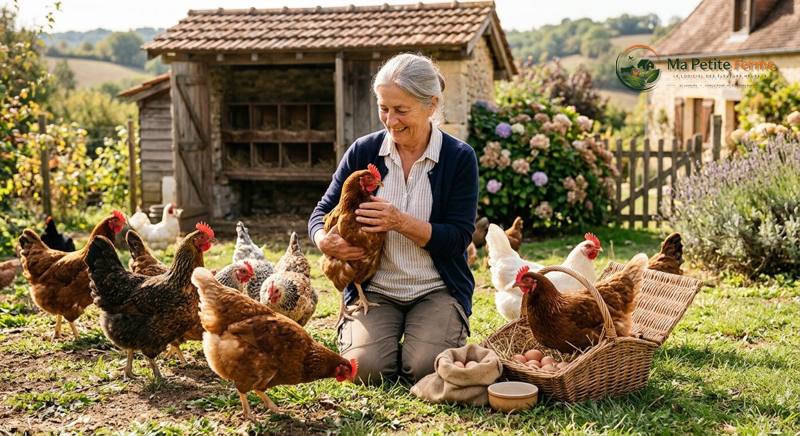
Understanding the concept of culling in laying hen farming
In a laying hen operation, culling refers to the moment when a hen is removed from the productive flock. This is not a trivial decision: it directly impacts the profitability of your operation, the quality of the eggs produced, and animal welfare. As a small-scale producer, mastering this timeline allows you to optimize your resources and avoid feeding animals that no longer cover their production costs.
At what age should laying hens be culled?
A laying hen begins producing at around 18 to 20 weeks, depending on the breed. Her peak laying period is reached at around 25 to 30 weeks, with a rate that can exceed 90% under the best conditions. Production then naturally declines.
In conventional intensive farming, hens are culled as early as 72 weeks (approximately 17 months). In farmyard or organic farming, this is often extended to 18 to 24 months, or even a little longer depending on the breed and objectives. Beyond this age, the laying rate drops significantly — often below 60 to 70% — and shell quality can deteriorate, leading to greater losses.
A few concrete signs indicate that it is time to cull: irregular or very low laying, eggs with thin or misshapen shells, notable weight loss, or late and prolonged molts. Observe your animals regularly to spot these signals.
What to do with hens at the end of their productive life?
Culling does not necessarily mean losing money. On the contrary, several outlets are available to you to make intelligent use of these animals.
Slaughter and short-circuit sales represent the first option. The culled hen, or "stewing hen," is a flavorful meat highly appreciated by discerning consumers. Sold whole or cut up at markets, through direct farm sales, or via community-supported agriculture schemes, it easily finds buyers provided it is well marketed. Highlight its authentic taste, its farming method, and its local origin.
Processing is another interesting avenue: artisanal broths, poultry rillettes, pâtés… These processed products have excellent added value and keep well. Make sure, however, to comply with current regulations regarding processing facilities and labeling.
Selling live hens to individuals wishing to start a small backyard chicken coop is also possible. An 18-month-old hen still lays enough to satisfy a household, and this market is booming thanks to the growing enthusiasm for food self-sufficiency.
Planning ahead for culling to ensure smooth flock management
Planning for culling is part of thoughtful flock management. Record the entry dates of each batch, track laying curves, and plan your replacements in advance. A good farming logbook is your best ally. By planning ahead, you avoid production gaps and maintain a consistent supply for your customers — a major asset in direct sales.
When well managed, culling is an opportunity as much as a necessity. It is part of a logic of sustainability and complete utilization of your farming operation, two values at the heart of today's farmstead agriculture.
Related articles — Laying hens: at what age should they be culled and what to do next?
How Many Laying Hens Do You Need to Live from Selling Eggs Through Short Supply Chains?
What size laying hen flock do you need to generate a viable income through direct sales? Discover our practical advice for small-scale producers.
Laying hen farming in Aveyron: testimonials and advice from local producers
Discover the secrets of Aveyron farmers to succeed in your laying hen farming and sell your eggs through short supply chains.
Laying Hens: The Best Breeds for Profitable Short Supply Chain Farming
Discover which laying hen breeds to choose to maximize your egg production and attract customers through direct sales.
Farms in our network — Laying hens: at what age should they be culled and what to do next?

Get our tips by email
Livestock, production and short-circuit selling — our best tips, no spam.