Setting up a compliant free-range chicken coop to sell through short supply chains
By La Rédaction — Ma Petite Ferme · 14/10/2026
Why compliance of your henhouse is essential in short supply chains?
Selling your eggs or poultry directly to consumers is a wonderful human and economic adventure. But before you get started, it is essential to ensure that your facility meets French regulatory requirements. A compliant henhouse protects you legally, reassures your customers and enhances your reputation as a serious producer. In short supply chains, trust is your greatest commercial asset.
Essential standards for a free-range henhouse
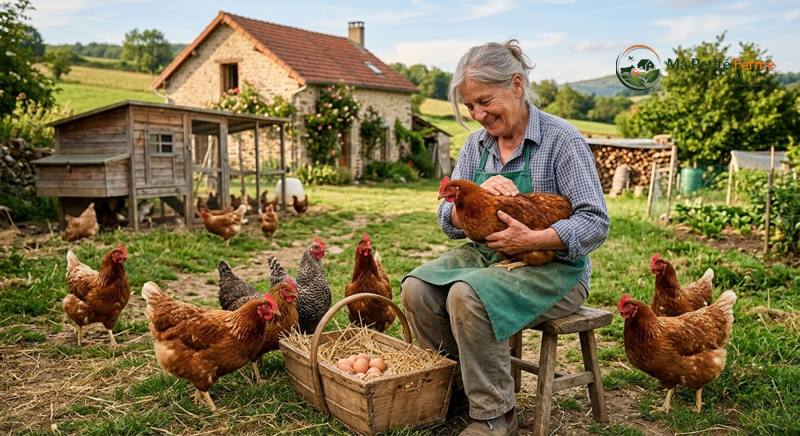
In France, the "free-range" label is governed by European regulations. Each laying hen must have a minimum of 4 m² of outdoor space. For free-range broiler chickens, the indoor density must not exceed 13 birds per m² inside the building, with permanent access to a grassed run. The building must be properly ventilated, insulated, and equipped with perches, nesting boxes and drinkers suited to the number of animals. Sufficient natural lighting is also mandatory.
Administrative declarations and authorisations to plan for
Before building or installing your henhouse, several administrative steps are unavoidable. If your flock exceeds 50 birds, you must declare your farm to the Departmental Directorate for the Protection of Populations (DDPP). Below this threshold, direct sales remain simplified, but you must still comply with food hygiene rules. For the construction itself, a prior declaration of works or a building permit may be required depending on the size of the building and local planning regulations. Check with your local town hall.
Developing the outdoor run: a key point that is often overlooked
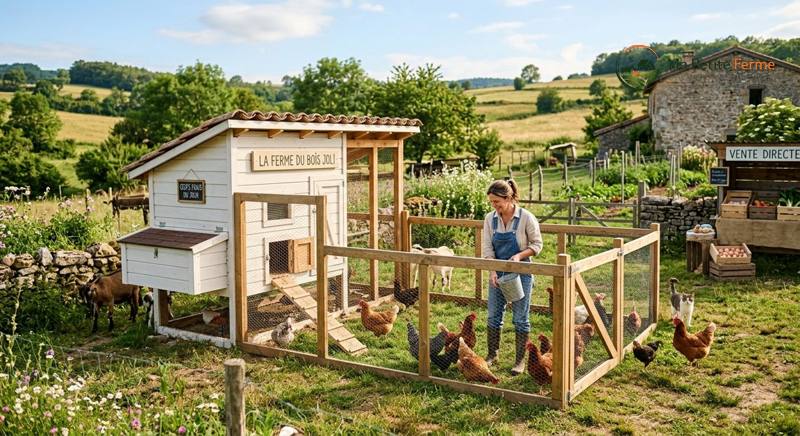
The free-range run must be grassed, varied and well maintained. Plan for shaded areas using shrubs or windbreak nets to protect your poultry from predators and bad weather. Rotation of the runs is strongly recommended to prevent overgrazing and reduce health risks associated with parasites. Also consider securing the perimeter with appropriately sized wire mesh to prevent foxes or birds of prey from getting in.
Hygiene and traceability: the basics for selling with peace of mind
Selling through short supply chains does not exempt you from hygiene obligations. Your henhouse must be easy to clean and disinfect: opt for concrete floors or slatted flooring. Keep an up-to-date farm register: animal arrivals and departures, veterinary treatments, and mortality records. For egg sales, marking eggs with the producer code is mandatory as soon as you sell outside your farm. These good practices strengthen your credibility with buyers and make any inspections easier.
Getting support to start off on the right foot
Do not hesitate to contact your departmental Chamber of Agriculture or a local producers' association. Specialist advisors can help you size your project, put together your application files and identify available financial support. A good start is the guarantee of a sustainable farming operation and successful sales through short supply chains.
Related articles — Setting up a compliant free-range chicken coop to sell through short supply chains
How Many Laying Hens Do You Need to Live from Selling Eggs Through Short Supply Chains?
What size laying hen flock do you need to generate a viable income through direct sales? Discover our practical advice for small-scale producers.
Free-range laying hen farming: what does it really cost?
Discover the real cost of free-range laying hen farming: investments, ongoing expenses and return on investment for small-scale producers.
Spent laying hens: should you keep them or sell them?
When a hen lays less, should you cull her, keep her, or sell her? Find out how to make the best decision for your farm.
Farms in our network — Setting up a compliant free-range chicken coop to sell through short supply chains

Get our tips by email
Livestock, production and short-circuit selling — our best tips, no spam.