
Free-range laying hen farming: what does it really cost?
By La Rédaction — Ma Petite Ferme · 09/09/2026
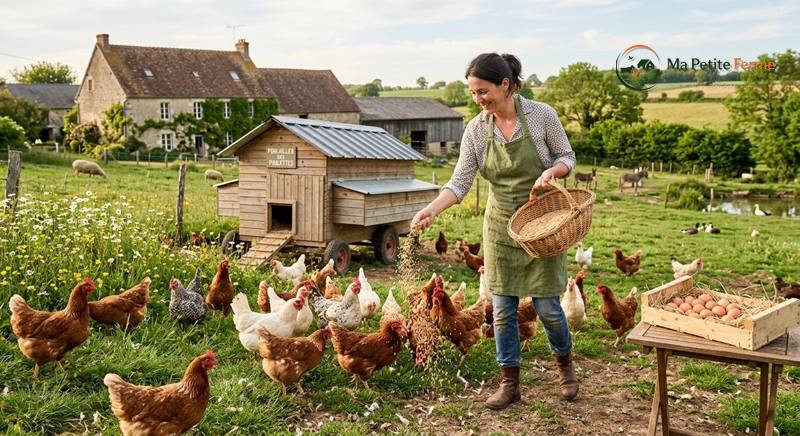
Why start free-range laying hen farming?
More and more small producers and private individuals are looking to get into free-range laying hen farming. And for good reason: farm eggs sell well, demand for short supply chains is exploding, and this farming method respects animal welfare. But before you get started, it is essential to understand what this really means in terms of budget. Here is an overview of the costs to anticipate.
Initial investments to plan for
The first major expense involves housing for your poultry. A henhouse suitable for around twenty hens costs between €500 and €2,000 depending on whether it is self-built or purchased new. Add to this the fencing to secure the outdoor area: budget around €300 to €800 for a well-defined space protected from predators. Purchasing the laying hens represents another key expense: a pullet ready to lay costs between €8 and €15 depending on the breed and supplier. For a small operation of 20 to 50 birds, plan on spending between €160 and €750. Finally, basic equipment — drinkers, feeders, nesting boxes, lamps — represents an investment of €150 to €400 depending on the quality of the equipment chosen.
Ongoing expenses: what you will spend each month
Feed is the most significant day-to-day operating cost. A laying hen consumes approximately 120 grams of feed per day. For 50 hens, this amounts to around 180 kg of feed per month, at a cost of between €50 and €90 depending on the quality and origin of the feed (organic, conventional, maize supplement). Free-range access can slightly reduce this bill thanks to insects and grass consumed naturally. Veterinary fees and health prevention must also be budgeted for: vaccinations, deworming treatments and occasional visits average €30 to €60 per year for a small operation. Bedding (straw, wood shavings) is a recurring but modest expense: budget €10 to €20 per month.
What income can you expect from 50 laying hens?
A healthy laying hen produces between 250 and 300 eggs per year. With 50 hens, you obtain approximately 12,000 to 15,000 eggs annually. Sold through direct farm sales or at markets, a box of 6 free-range certified farm eggs fetches between €2.50 and €4. This represents a potential turnover of €5,000 to €10,000 per year for a 50-hen operation. Once expenses are deducted, the net profit remains modest for a supplementary activity, but can represent a genuine, regular and stable additional income.
Conclusion: an accessible project, provided you plan your budget carefully
Free-range laying hen farming is a project within reach of many producers, provided costs are carefully anticipated. By investing in a quality initial setup, managing your feed costs, and selling your eggs through direct sales channels, you can build a profitable and rewarding activity. Do not hesitate to contact your local agricultural chamber for personalised advice before getting started.
Related articles — Free-range laying hen farming: what does it really cost?
Laying hens in cages or free-range: what to choose for your farm?
Cage or free-range: discover the advantages, disadvantages and regulations to help you choose the right laying hen farming system.
Free-range laying hen farming: benefits, challenges and practical tips
Discover how to succeed in free-range laying hen farming: animal welfare, egg quality and concrete advice for small-scale producers.
Laying Hens: The Best Breeds for Profitable Short Supply Chain Farming
Discover which laying hen breeds to choose to maximize your egg production and attract customers through direct sales.
Farms in our network — Free-range laying hen farming: what does it really cost?
Get our tips by email
Livestock, production and short-circuit selling — our best tips, no spam.