Laying hens: how to set the right selling price depending on your region
By La Rédaction — Ma Petite Ferme · 21/10/2026
Why does the price of a laying hen vary from one region to another?
In France, the short supply chain market for laying hens is booming. However, prices can vary twofold depending on whether you are in a rural, peri-urban, or large metropolitan area. A producer in Brittany will not necessarily sell their hens at the same price as a farmer in Île-de-France or Provence. Local purchasing power, supply density, and regional food culture directly influence what your customers are willing to pay.
Production costs: your essential starting point
Before even looking at what your neighbours are doing, start by calculating your own production costs. Take into account feed (organic or conventional), veterinary expenses, building depreciation, labour, and certification fees if you practice organic farming. Generally speaking, raising a free-range laying hen costs between 15 and 25 euros per animal over its entire productive life. This figure represents your non-negotiable price floor. Never sell below your actual costs, or you risk undermining your farm's financial stability.
Researching market prices in your region
Once your costs are established, explore your local area. Visit local farmers' markets, browse listings on specialist platforms such as Le Bon Coin or Agriaffaires, and seek information from your regional agricultural chamber. In urban or tourist areas, a Label Rouge or organically raised laying hen can easily sell for between 25 and 40 euros. In traditional rural areas, prices tend to range between 15 and 25 euros. Knowing these brackets allows you to position yourself intelligently without underselling your work.
Adding value to your farming operation to justify a premium price
Price is not set solely on economic criteria: it also reflects the value perceived by the buyer. If your hens are free-range, fed without GMOs, bred from heritage breeds, or organically certified, communicate this clearly. A well-crafted presentation sheet, authentic photographs, and a transparent account of your farming practices allow you to justify a price above the average. Consumers in short supply chains are looking for connection, trust, and quality: offer them these three pillars and they will gladly pay a fair price.
Adapting your price according to the season and demand
Demand for laying hens experiences seasonal peaks, particularly in spring when individuals are setting up their gardens. This is the ideal time to offer your birds at a slightly higher price, without going overboard. Conversely, in autumn or winter, you can adjust your price to move your stock and build customer loyalty, encouraging buyers to return the following year. Well-managed pricing flexibility is a genuine lever for profitability for small-scale farmers selling direct.
Conclusion: a fair price, for you and for your customers
Setting the right price for your laying hens means finding the balance between your economic requirements, local market realities, and the value of your expertise. Take the time to analyse, communicate, and adjust. A consistent and well-considered price is the key to a sustainable and fulfilling farm sales operation.
Related articles — Laying hens: how to set the right selling price depending on your region
Finding laying hens for sale near you: the right reflexes before buying
Looking for laying hens close to home? Discover our practical tips for buying healthy poultry and choosing the right local breeder.
Free-range laying hen farming: what does it really cost?
Discover the real cost of free-range laying hen farming: investments, ongoing expenses and return on investment for small-scale producers.
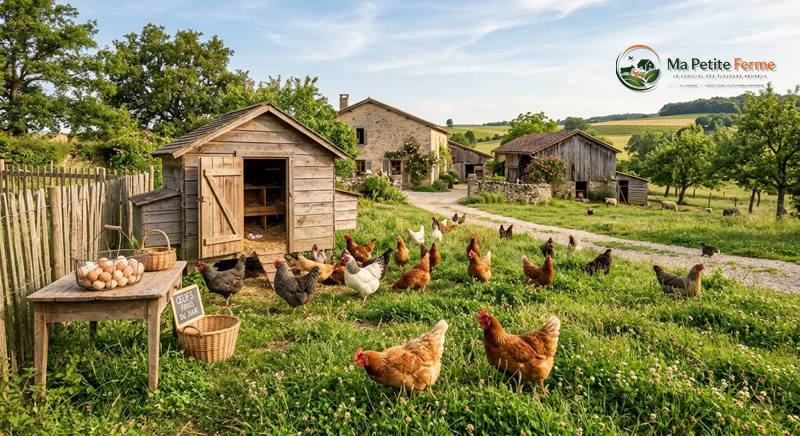
Laying hens in cages or free-range: what to choose for your farm?
Cage or free-range: discover the advantages, disadvantages and regulations to help you choose the right laying hen farming system.
Farms in our network — Laying hens: how to set the right selling price depending on your region

Get our tips by email
Livestock, production and short-circuit selling — our best tips, no spam.