Laying hens in cages or free-range: what to choose for your farm?
By La Rédaction — Ma Petite Ferme · 26/08/2026
Two farming systems, two philosophies
When starting out in laying hen farming, the question of housing system is fundamental. Between cage farming and free-range farming, the differences are numerous: animal welfare, costs, yield, marketing… Each approach meets distinct objectives, and the choice depends closely on your farm project and your values as a producer.
Cage farming: a system on its way out
Long dominant in industrial production, enriched cage farming allows for easier health monitoring, simplified manure management and lower mortality linked to aggressive behaviour between animals. Construction costs are often lower and stocking density higher, which may seem economically attractive in the short term.
However, this system is increasingly challenged. On the regulatory front, the European Union banned non-enriched cages as early as 2012, and several member states, including France, are considering a total ban on enriched cages by 2030 as part of the "Farm to Fork" strategy. For a small producer selling through short supply chains, this model also offers little commercial value: local consumers and distributors are strongly opposed to it.
Free-range farming: the preferred choice for direct sales
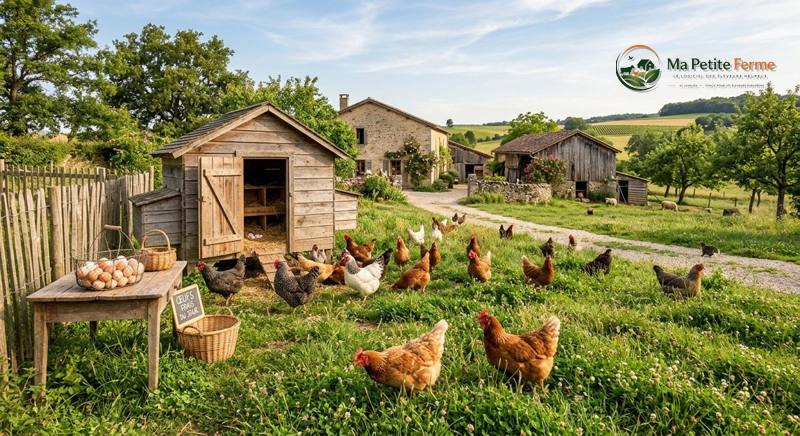
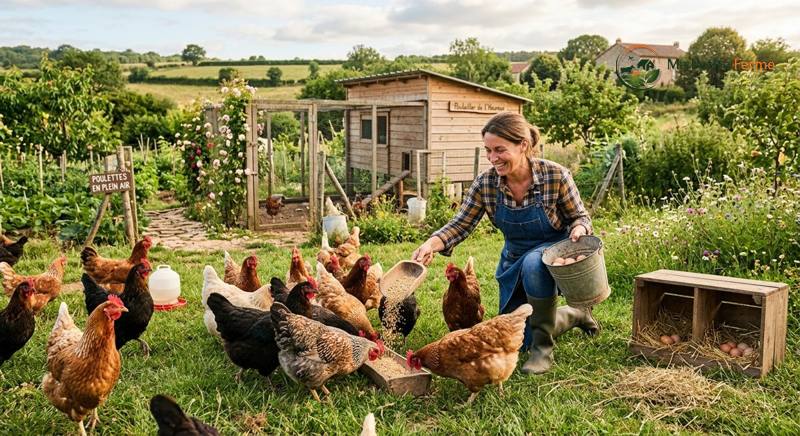
Free-range laying hen farming gives animals daily access to an outdoor grassy area, in accordance with official specifications. This system meets consumers' growing expectations regarding animal welfare and egg quality. The hens benefit from a varied diet, natural behaviours (scratching, dust bathing, pecking) and a better expression of their instincts.
For the farm producer, it is a genuine marketing asset: eggs from free-range hens sell better, at more rewarding prices, particularly at markets, in community-supported agriculture (AMAP) schemes or at farm shops. The "free-range" label is regulated: the outdoor area must represent a minimum of 4 m² per hen, with appropriate vegetation and shelters allowing the animals to access it freely.
What French regulations say
In France, egg labelling is mandatory and clearly indicates the farming method: code 0 corresponds to organic farming, code 1 to free-range, code 2 to barn farming and code 3 to cage farming. These codes are directly readable by consumers, which reinforces transparency and the importance of your choice of system for your image as a producer.
Furthermore, any flock of more than 250 laying hens must be declared to the local town hall and may fall under the classified installations for environmental protection (ICPE) regime beyond certain thresholds. It is therefore essential to seek information from the Departmental Directorate for Population Protection (DDPP) before getting started.
Our advice for small producers
For a short supply chain operation, free-range farming — or even organic farming — represents the best balance between animal welfare, long-term profitability and commercial value. It is a choice consistent with today's consumer expectations and with upcoming regulatory developments. Focus on quality, transparency and a direct relationship with your customers: these are your greatest assets!
Related articles — Laying hens in cages or free-range: what to choose for your farm?
Free-range laying hen farming: benefits, challenges and practical tips
Discover how to succeed in free-range laying hen farming: animal welfare, egg quality and concrete advice for small-scale producers.
Free-range laying hens: the method winning over short supply chain buyers
Discover why raising your laying hens free-range boosts your short supply chain sales and builds lasting loyalty among your local customers.
Managing laying hens on a daily basis: practical tips for successful poultry farming
Discover how to care for your laying hens every day to ensure their well-being and maximize your egg production in short supply chains.
Farms in our network — Laying hens in cages or free-range: what to choose for your farm?

Get our tips by email
Livestock, production and short-circuit selling — our best tips, no spam.