Battery cage laying hen farming: what every producer needs to know
By La Rédaction — Ma Petite Ferme · 14/10/2026
What is battery cage farming for laying hens?
Battery cage farming refers to an intensive farming system in which laying hens are housed in wire cages stacked on top of one another. Long dominant in France and across Europe, this production method has undergone profound changes as a result of European regulations and growing consumer expectations regarding animal welfare.
The advantages of this system for farmers
From an economic and technical standpoint, battery cage farming offers several undeniable strengths for producers. The density of animals per square metre is high, making it possible to produce a large volume of eggs in a limited space. Health management is also made easier: hens are kept off the ground, which limits contact with parasites and pathogens. Egg collection is mechanised, reducing labour time and losses. Finally, environmental parameters (light, temperature, ventilation) are optimally controlled within these enclosed facilities.
The disadvantages and criticisms of the system
Despite these operational advantages, battery cage farming faces severe criticism from an animal welfare perspective. Confined to a very restricted space, hens are unable to perch, dust-bathe, or express their natural behaviours. This chronic stress leads to behavioural disorders such as feather pecking. On the market side, eggs from conventional cages are increasingly rejected by retailers and consumers, who are turning towards free-range, organic, or Label Rouge eggs. For a small producer selling direct to customers, this system is therefore poorly suited to local clientele expectations.
Current French and European regulations
In Europe, Directive 1999/74/EC banned unenriched cages as of January 2012. Only so-called "furnished" or "enriched" cages remain authorised: they provide a minimum space of 750 cm² per hen, along with a nest, a perch, and litter for scratching. In France, national regulations follow this European framework. It is worth noting that several major retailers and food industry players have committed to no longer selling eggs from caged hens by 2025–2026. A revision of European legislation is also underway as part of the "Farm to Fork" strategy.
What alternatives exist for small producers?
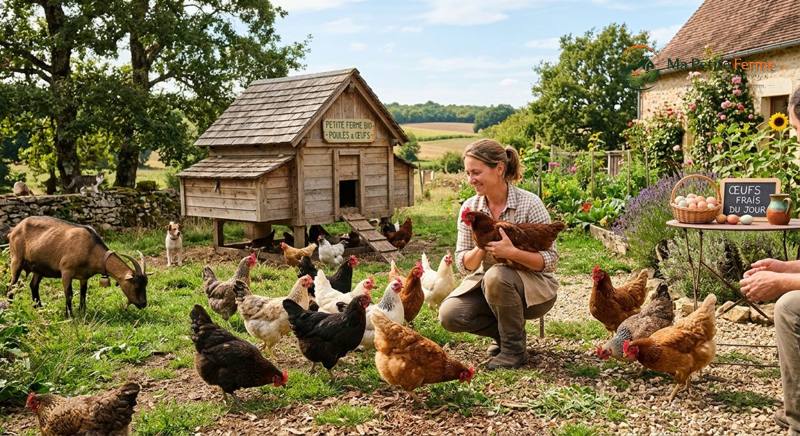
For a farmer operating through short supply chains, alternative systems such as free-range, barn, or organic farming are far better suited. These production methods place greater value on the producer's work, meet the expectations of local consumers, and allow for better communication of the farm's values. Eggs from free-range hens sell more easily at markets, through community-supported agriculture schemes (AMAPs), or directly at the farm, often with a higher profit margin.
In summary, while battery cage farming has played a major role in shaping the French poultry industry, it is increasingly at odds with current market realities and regulatory requirements. Small producers would be well advised to position themselves within alternative systems, which are more virtuous and better rewarded in direct sales.
Related articles — Battery cage laying hen farming: what every producer needs to know
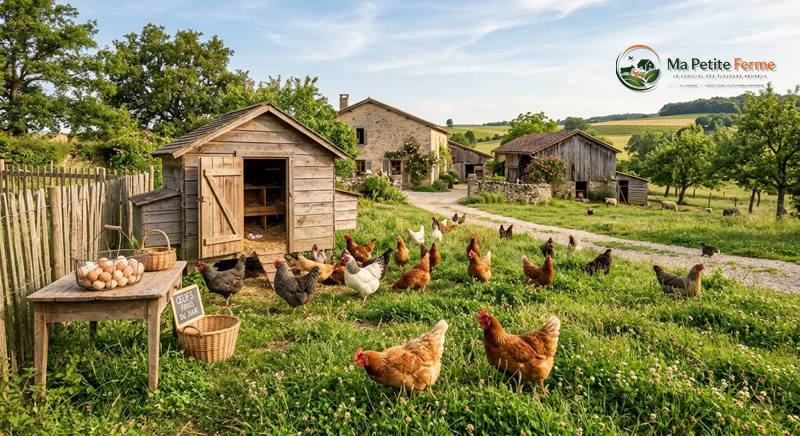
Laying hens in cages or free-range: what to choose for your farm?
Cage or free-range: discover the advantages, disadvantages and regulations to help you choose the right laying hen farming system.
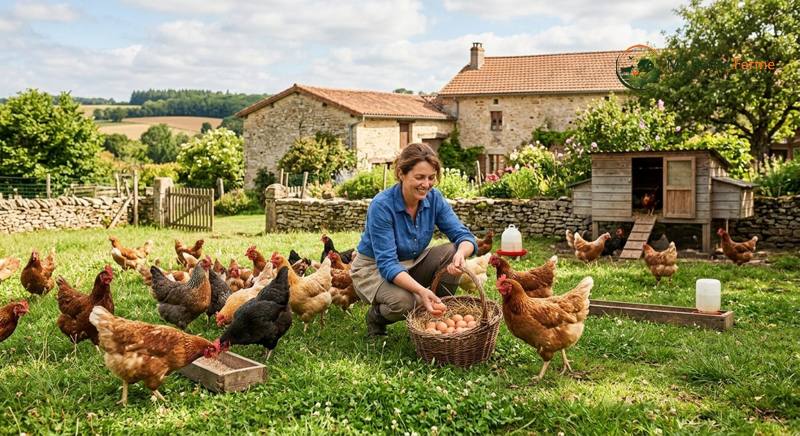
Free-range laying hen farming: benefits, challenges and practical tips
Discover how to succeed in free-range laying hen farming: animal welfare, egg quality and concrete advice for small-scale producers.
Finding laying hens for sale near you: the right reflexes before buying
Looking for laying hens close to home? Discover our practical tips for buying healthy poultry and choosing the right local breeder.
Farms in our network — Battery cage laying hen farming: what every producer needs to know

Get our tips by email
Livestock, production and short-circuit selling — our best tips, no spam.