
Managing laying hens on a daily basis: practical tips for successful poultry farming
By La Rédaction — Ma Petite Ferme · 11/08/2026
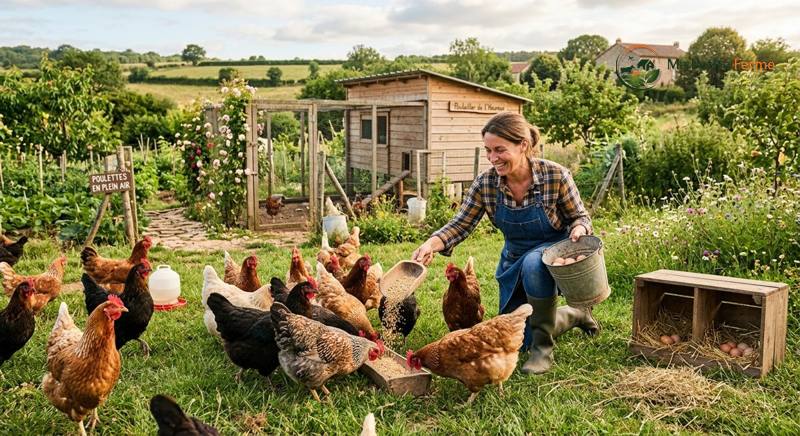
The importance of a well-established daily routine
Managing laying hens on a daily basis requires consistency and careful observation. Hens are animals that appreciate stability: they thrive when their days follow a predictable rhythm. As a small-scale producer, establishing a solid routine is the first key to a healthy and productive flock. Every morning, the henhouse should be opened at a fixed time, allowing the hens to access the outdoor run and their fresh feed.
Feeding and watering, the pillars of egg production
A laying hen needs approximately 120 to 150 grams of complete feed per day, to which you can add natural supplements such as vegetable peelings, sprouted grains, or calcium in the form of crushed oyster shells. The latter is essential for producing strong and resistant eggshells. Fresh, clean water must be available at all times: a hen that lacks water will immediately reduce her production. Remember to rinse the drinkers every morning and fill them generously, especially during hot summer periods.
Monitoring the health and behaviour of the flock
Daily observation of your flock is a fundamental practice. Take the time, every day, to watch your hens as they go about their activities: an isolated, lethargic hen that is not eating is often the first sign of a health problem. Regularly check the condition of their plumage, the colour of their combs and wattles, as well as the consistency of their droppings. These indicators will allow you to quickly detect a parasitic infection, a disease, or stress related to density or the group's hierarchy. Do not forget to check the condition of their feet and to take preventive action against red mites, formidable parasites that disrupt egg production and weaken the animals.
Egg collection and henhouse maintenance
Egg collection should ideally take place twice a day, in the morning and in the early afternoon. This limits the risks of breakage, soiled eggs, or pecking behaviour triggered by other hens discovering the eggs. Record your daily production in a logbook: this will help you identify drops in laying and adjust your management accordingly. As for hygiene, replace the litter as soon as it becomes damp or soiled, and carry out a thorough cleaning of the henhouse every six to eight weeks. A clean environment considerably reduces health risks and improves animal welfare.
Optimising management for direct sales
If you sell your eggs through direct sales or at local markets, the consistency of your production is a valuable selling point. Hens that are well fed, well cared for, and living in a healthy environment will provide you with quality eggs that your loyal customers will appreciate. Highlight your farming methods in your communications: transparency reassures and builds customer loyalty. Sound daily management is also the best guarantee of a solid reputation for your farm.
Related articles — Managing laying hens on a daily basis: practical tips for successful poultry farming
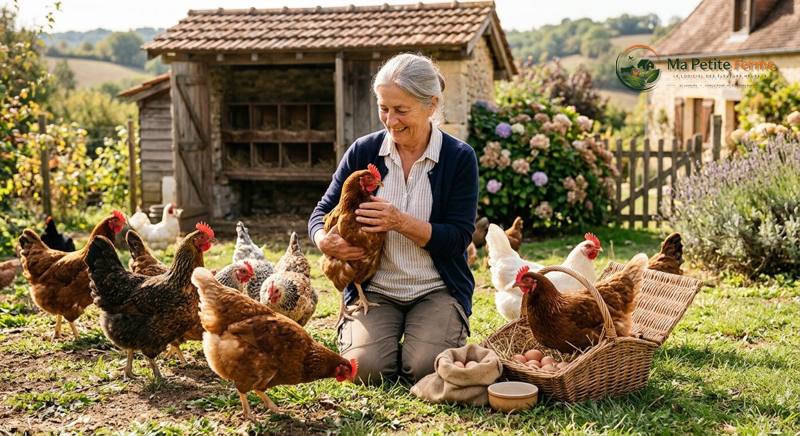
Laying hens: at what age should they be culled and what to do next?
Knowing when to cull your laying hens is essential to optimise the profitability of your flock. Discover the right benchmarks and possible outlets.
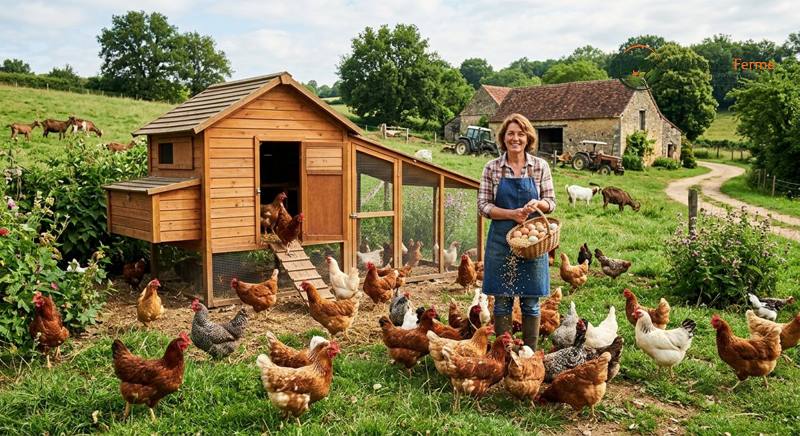
Battery cage laying hen farming: what every producer needs to know
Advantages, disadvantages and legal framework of cage farming for laying hens in France. Everything you need to know before getting started.
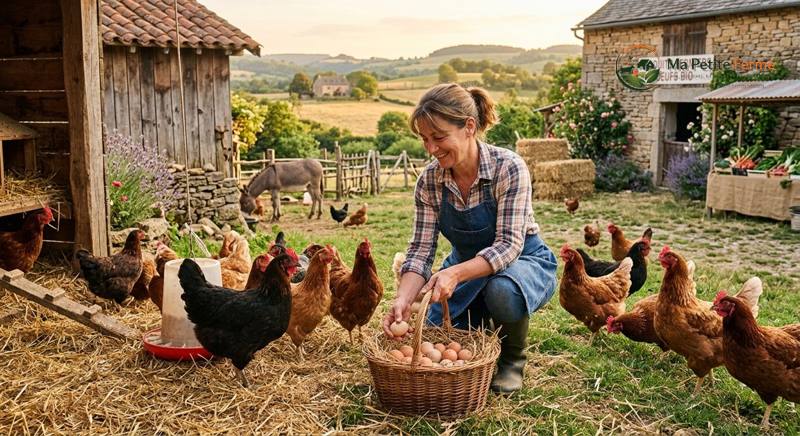
Laying hen farming in Aveyron: testimonials and advice from local producers
Discover the secrets of Aveyron farmers to succeed in your laying hen farming and sell your eggs through short supply chains.
Farms in our network — Managing laying hens on a daily basis: practical tips for successful poultry farming
Get our tips by email
Livestock, production and short-circuit selling — our best tips, no spam.