
How Big Does a Chicken Coop Need to Be? The Complete Guide for Small Farmers
By La Rédaction — Ma Petite Ferme · 03/08/2026
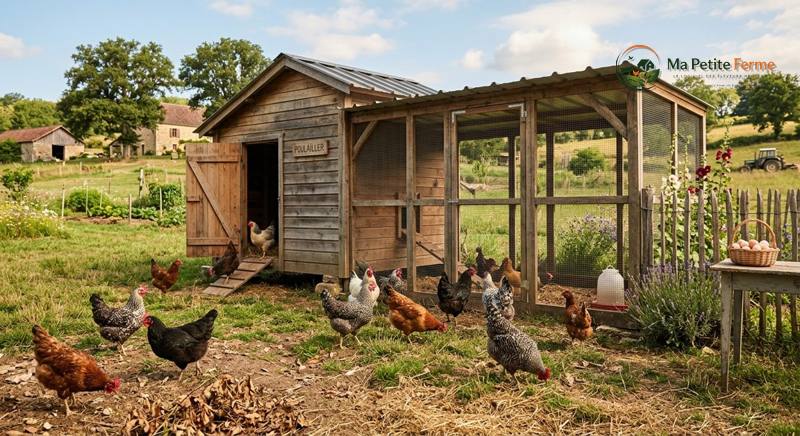
Why Coop Size Matters for Your Flock's Health
One of the most common questions new poultry keepers ask is: how big does a chicken coop need to be? Getting the size right is one of the most important decisions you'll make for your flock. A coop that is too small leads to stress, feather pecking, disease spread, and lower egg production. A well-sized coop, on the other hand, keeps your birds calm, healthy, and laying consistently — which is exactly what small farmers and direct-sales producers need.
The Golden Rule: Space Per Chicken Inside the Coop
As a general rule of thumb, you should allow at least 3 to 4 square feet of indoor coop space per standard-sized chicken. For larger breeds like Jersey Giants or Brahmas, aim for 4 to 5 square feet per bird. Bantam breeds can manage with around 2 square feet each. These measurements apply strictly to the sleeping and sheltering area — not the outdoor run.
For example, if you plan to keep 10 standard hens, your coop should be at least 30 to 40 square feet of interior floor space. A simple 6×6 ft coop works well for 8 to 10 birds, while a 8×10 ft structure comfortably houses 15 to 20 hens.
Don't Forget the Outdoor Run
The indoor coop is only part of the equation. Chickens need access to an outdoor run for exercise, foraging, and mental stimulation. Plan for a minimum of 8 to 10 square feet of run space per bird. If your birds are fully free-range, space requirements are much more flexible, but a secure run remains essential for safety during nights or bad weather.
Key Features to Include Regardless of Coop Size
Beyond square footage, a well-designed coop must include several essential features. First, provide one nesting box for every 3 to 4 hens — overcrowding nesting boxes causes broken eggs and stress. Second, install 8 to 10 inches of roosting bar per bird so every chicken has a comfortable place to sleep. Proper ventilation is also critical: aim for at least 1 square foot of ventilation opening per 10 birds to prevent moisture buildup and respiratory disease. Finally, ensure easy access for cleaning, as good hygiene directly impacts egg quality and flock health.
Scaling Up for a Farm-Direct Business
If you're selling eggs or poultry products at farmers markets or through a CSA, your flock size — and therefore your coop — will likely need to grow over time. Build slightly larger than your current needs. A coop designed for 25 birds when you only have 15 gives you room to expand without costly renovations. Many small farmers find that a modular or expandable coop design saves both time and money in the long run.
Final Thoughts: Invest in Space, Reap the Rewards
Giving your chickens adequate space is one of the smartest investments you can make as a small-scale farmer. Healthy, low-stress birds produce more eggs, require fewer veterinary interventions, and represent your farm's values to customers who care about animal welfare. Start with the right size, and your flock — and your farm business — will thrive.
Related articles — How Big Does a Chicken Coop Need to Be? The Complete Guide for Small Farmers

Laying Hens: The Best Breeds for Profitable Short Supply Chain Farming
Discover which laying hen breeds to choose to maximize your egg production and attract customers through direct sales.

Free-range laying hen farming: what does it really cost?
Discover the real cost of free-range laying hen farming: investments, ongoing expenses and return on investment for small-scale producers.

Direct farm sales in short supply chains: how to get started depending on your region
Discover how to launch your direct farm sales activity in short supply chains, with advice tailored to each region of France.
Farms in our network — How Big Does a Chicken Coop Need to Be? The Complete Guide for Small Farmers
Get our tips by email
Livestock, production and short-circuit selling — our best tips, no spam.