Essential vitamins for the health of your laying hens
By La Rédaction — Ma Petite Ferme · 02/08/2026
Why are vitamins so important for your hens?
The health of your hens depends largely on a balanced vitamin intake. Whether they are laying hens, broilers, or ornamental breeds, all of them need a full spectrum of vitamins to reach their full potential. Even a mild deficiency can lead to a drop in egg production, fragile eggs, dull plumage, or increased susceptibility to disease. As a small-scale producer, understanding the nutritional needs of your poultry is a real lever for improving your results and reducing your veterinary costs.
Fat-soluble vitamins: A, D, E and K
Fat-soluble vitamins are stored in the fat and liver of your animals. Vitamin A is essential for vision, resistance to infections, and the health of mucous membranes. It is naturally found in green vegetables, carrots, and yellow corn. Vitamin D3 plays a key role in the absorption of calcium and phosphorus: a deficiency causes weak bones, deformed legs, and overly thin eggshells. Hens raised outdoors synthesize some of this vitamin through sunlight. Vitamin E is a powerful antioxidant that strengthens the immune system and improves fertility. Finally, vitamin K is involved in blood clotting and prevents internal bleeding, which is sometimes observed in young chicks.
Water-soluble vitamins: the B group and vitamin C
B-group vitamins are essential for energy metabolism and the proper functioning of your poultry's nervous system. Vitamin B1 (thiamine) prevents nervous disorders. Vitamin B2 (riboflavin) is crucial for chick growth and the quality of hatching eggs. Vitamin B12 contributes to the formation of red blood cells and the overall vitality of the flock. Vitamin PP (niacin) supports the health of the skin and legs. As for vitamin C, hens synthesize it themselves under normal conditions, but an additional supply can prove beneficial during periods of heat stress or illness.
How to provide the right vitamins to your hens on a daily basis?
A varied diet remains the best strategy. A good commercial complete feed generally covers basic needs. To go further, consider regularly offering fresh vegetables, aromatic herbs, grazed grass, and sprouted grains. During periods of stress, extreme cold, molting, or peak laying, you can turn to water-soluble vitamin supplements, available from your agricultural supplier. Always make sure to follow the recommended doses, as an excess of certain fat-soluble vitamins can be toxic. In short supply chains, highlighting the quality of your hens' diet is also a valuable selling point with your customers!
Related articles — Essential vitamins for the health of your laying hens
Which laying hen breed should you choose to maximize production?
Discover the best laying hen breeds to optimize your egg production in farm poultry keeping and make the right choices for your situation.
How Much Does a Laying Hen Cost? Purchase Price and Raising Costs Explained
Discover the purchase price of a laying hen and the real costs of raising them to properly prepare your short-circuit poultry farming project.
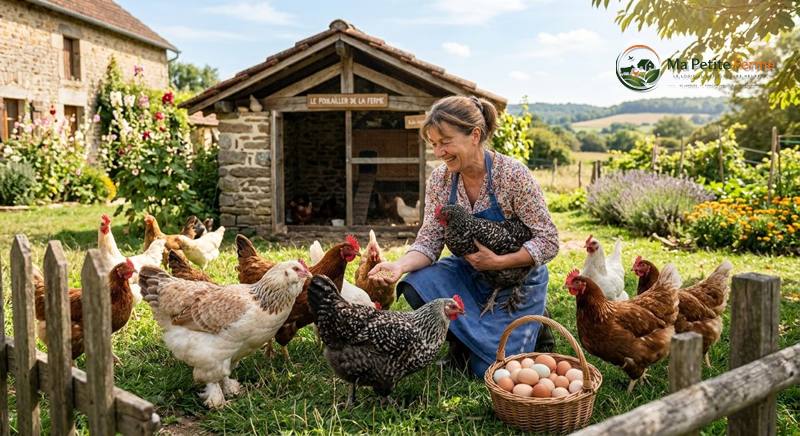
Which laying hen breed should you choose for your farm?
Discover how to choose the best laying hen breed based on your needs, land, and short supply chain production goals.
Farms in our network — Essential vitamins for the health of your laying hens

Get our tips by email
Livestock, production and short-circuit selling — our best tips, no spam.