
Hen laying: understand everything to maximize egg production
By La Rédaction — Ma Petite Ferme · 02/08/2026
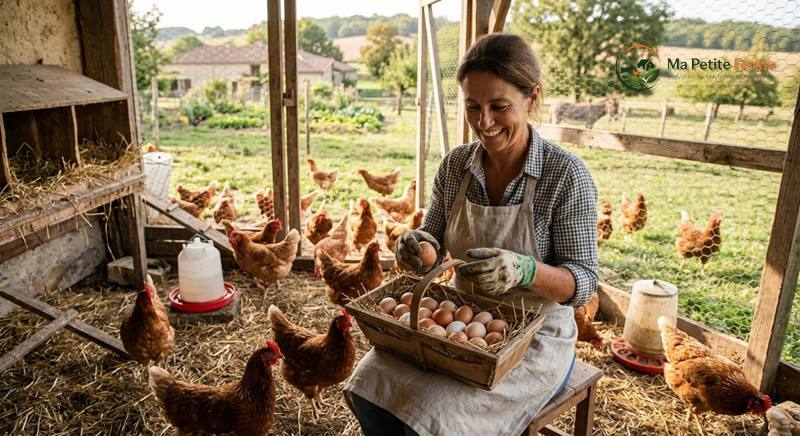
Understanding the Laying Cycle of Hens
Egg laying in hens is a natural process that typically begins when the pullet reaches sexual maturity, between 18 and 22 weeks depending on the breed. A healthy hen can lay up to 300 eggs per year, nearly one egg per day. This figure varies considerably depending on the animal's genetics, diet, and rearing conditions. By understanding this cycle well, you can adapt your practices to encourage regular and abundant laying.
The Factors That Influence Egg Production
Natural light is the first lever to master. Hens need 14 to 16 hours of light per day to maintain optimal laying. In winter, when days grow shorter, production can drop significantly. Many farmers compensate for this lack by installing artificial lighting in the henhouse, adding an extra hour in the morning or evening.
Nutrition also plays a central role. A complete feed rich in protein (16 to 18%), calcium, and essential amino acids is indispensable. Calcium, in particular, is crucial for shell formation. Consider making crushed oyster shells available on a free-access basis. A hen lacking calcium will lay eggs with fragile shells or will stop laying altogether.
Stress is a silent enemy of egg laying. Sudden changes in environment, predators, overcrowding, or excessive heat can cause significant drops in production. Make sure your hens have sufficient space, appropriate perches, and proper ventilation in the henhouse.
The Best Laying Breeds for Your Flock
The choice of breed is decisive. Among the best layers, you will find the White Leghorn, capable of exceeding 280 eggs per year, as well as the ISA Brown, very popular in farm-based poultry keeping for its prolificacy and calm temperament. If you are looking for a compromise between laying and meat production, breeds such as the Sussex or the Marans offer excellent performance while adding value to your eggs thanks to the recognized color and quality of their shells.
Monitoring and Supporting the Moult
Every year, in autumn, hens enter the moult: they shed their feathers and temporarily suspend laying, sometimes for 2 to 3 months. This is a natural period of regeneration. To support your birds during this time, slightly increase their protein intake and avoid unnecessary handling. After the moult, the resumption of laying is often of good quality.
Optimizing Collection and Selling Your Eggs Through Short Supply Chains
Daily egg collection is essential to guarantee freshness and to prevent hens from developing brooding behavior. When selling directly at the farm, a fresh egg from free-range hens raised on a healthy diet is a product your customers will favor. Highlight your farming method, the quality of your feed, and your traceability to build customer loyalty and justify a fair price.
Related articles — Hen laying: understand everything to maximize egg production
How to Get Hens to Lay Eggs: Our Tips to Optimize Egg Production
Discover the best practices to stimulate your hens' laying and maximize your egg production on the farm.
Hen laying: everything you need to know to maximize egg production on the farm
Discover how to optimize your hens' laying with our practical tips on nutrition, lighting, and animal welfare.
Feeding chart for laying hens: everything you need to know
Discover our complete laying hen feeding chart to optimize egg production and the health of your flock.
Farms in our network — Hen laying: understand everything to maximize egg production
Get our tips by email
Livestock, production and short-circuit selling — our best tips, no spam.