
What do laying hens eat? The ideal diet for quality eggs
By La Rédaction — Ma Petite Ferme · 02/08/2026
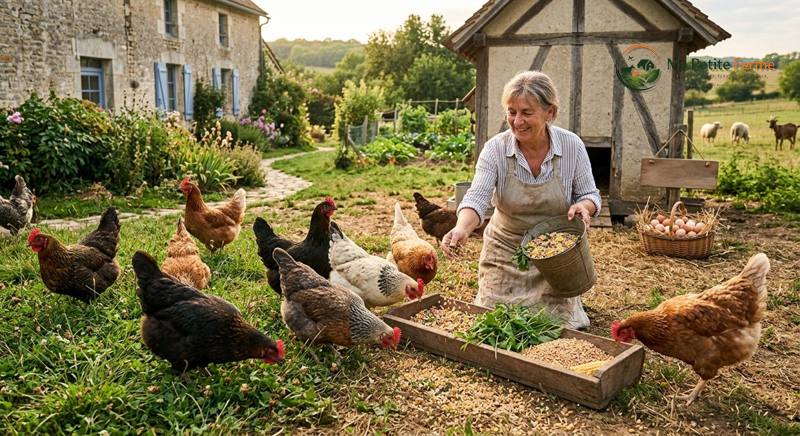
The essential nutritional needs of laying hens
A healthy laying hen has very specific dietary requirements. To produce eggs regularly, she must have a sufficient intake of proteins, calcium, vitamins and minerals. An unbalanced diet quickly results in a drop in egg production, fragile shells or dull plumage. As a small-scale producer, understanding what your laying hens eat is the foundation of successful poultry farming.
The basis of the diet: grains and pellets
The foundation of a laying hen's diet rests on grains such as wheat, corn or barley. These foods provide the energy needed for your poultry's daily activity. To simplify management, pellets or special "laying hen" mash are particularly recommended. These industrial or artisanal blends are formulated to meet all of the hen's nutritional needs in a single feeding. Allow approximately 120 to 150 grams of feed per hen per day.
Calcium: essential for strong shells
An eggshell is composed of more than 90% calcium carbonate. It is therefore crucial to supplement your hens with calcium, especially during periods of peak laying. To do this, make crushed oyster shells or granulated limestone available to your poultry in a separate feeder. Crushed eggshells recovered from your own production can also do the job, provided they are thoroughly cleaned and dried before being offered.
Proteins to support egg production
Proteins play a fundamental role in the formation of the egg white and yolk. Hens are naturally omnivores: they love to hunt insects, earthworms and slugs when they have access to an outdoor run. You can also offer them soybean or sunflower meal, cooked legumes, or maggots raised in an insectarium. In free-range conditions, a good pasture also provides them with considerable natural protein intake.
Fruits, vegetables and kitchen scraps: welcome supplements
Laying hens greatly enjoy healthy kitchen scraps: vegetable peelings, carrot tops, lettuce leaves, stale bread or bruised fruit. These foods diversify their diet and provide them with valuable vitamins. Be careful, however, to avoid certain toxic foods such as avocado, raw onion in large quantities, chocolate or excess citrus fruits. Also make sure that the scraps are not mouldy or fermented.
Water: the often forgotten nutrient
Water is the most important and most often overlooked nutrient. A laying hen drinks between 200 and 300 ml of water per day, more so during hot weather. A lack of water, even briefly, can cause a sudden drop in egg production. Make sure to provide clean, fresh water that is renewed daily. In winter, monitor that the drinkers do not freeze.
Related articles — What do laying hens eat? The ideal diet for quality eggs
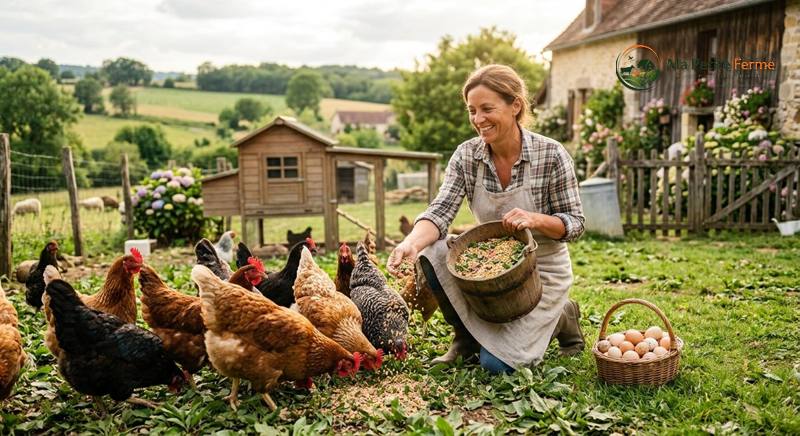
Feeding your chickens: a complete guide for healthy and abundant eggs
Discover how to properly feed your chickens to ensure their health, well-being and optimal egg production throughout the year.
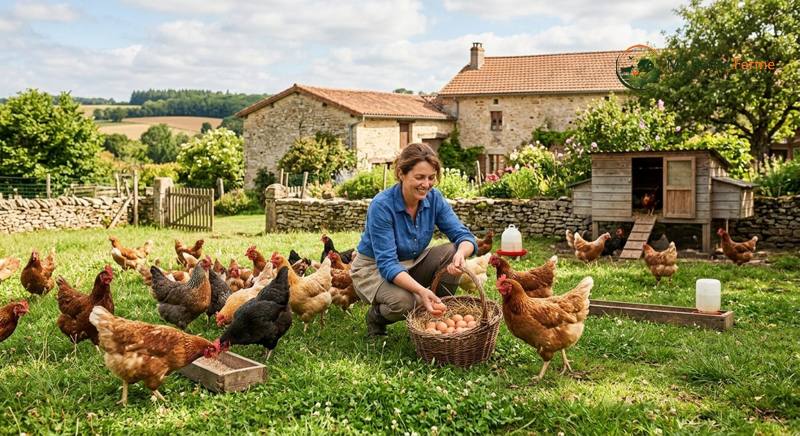
Free-range laying hen farming: benefits, challenges and practical tips
Discover how to succeed in free-range laying hen farming: animal welfare, egg quality and concrete advice for small-scale producers.
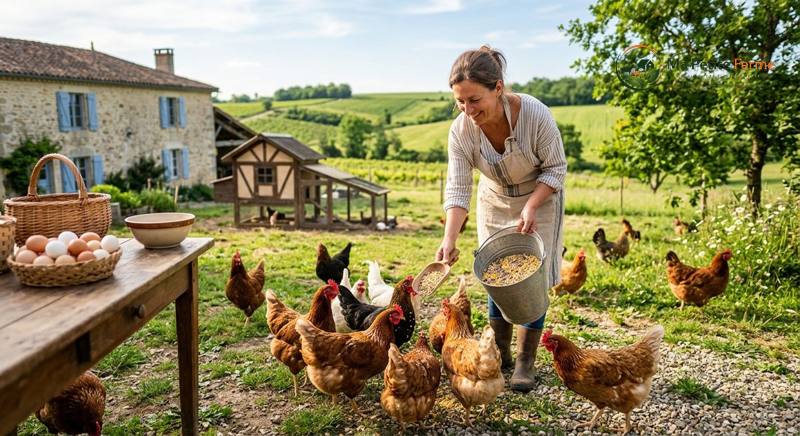
How to feed your laying hens properly: practical tips for successful poultry keeping
Discover how to feed your laying hens to optimize their health and egg production with our breeders' tips.
Farms in our network — What do laying hens eat? The ideal diet for quality eggs


Get our tips by email
Livestock, production and short-circuit selling — our best tips, no spam.