
Recognizing Heat in Cows: A Practical Guide for Farmers
By La Rédaction — Ma Petite Ferme · 02/08/2026
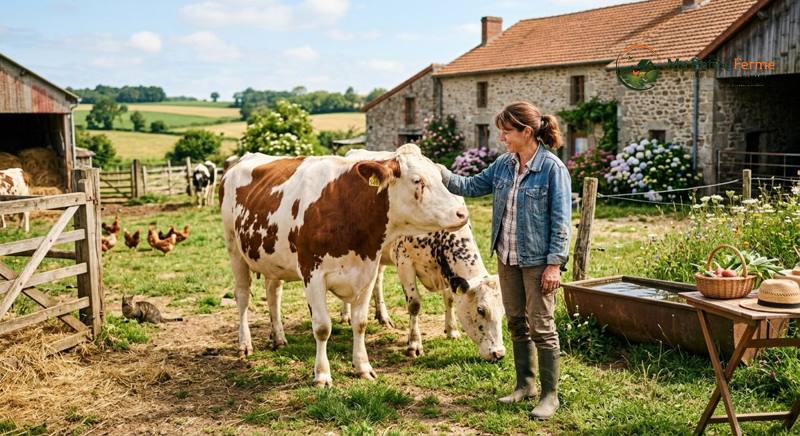
Why heat detection is crucial in cattle farming?
For every farmer, whether in dairy or beef production, managing reproduction is a major economic challenge. A cow or heifer that comes into heat without being detected means a missed mating or insemination, and therefore an additional 21-day cycle before the next opportunity. On a modest-sized farm, every non-productive day counts. Knowing how to accurately recognize the signs of heat is therefore a fundamental skill for any cattle producer.
Behavioral signs to watch for
Heat in female cattle lasts on average between 12 and 18 hours, with ovulation occurring approximately 12 hours after the end of heat. The window for intervention is therefore short, and daily observation of the herd is essential. The most reliable sign remains standing to be mounted: a cow in heat accepts being mounted by her herdmates without trying to move away. She may also attempt to mount other animals in the herd. Increased restlessness can also be observed, along with a tendency to bellow more frequently, a decrease in appetite, and sometimes a temporary drop in milk production.
Characteristic physical signs
Beyond behavior, several physical indicators help confirm that the female is indeed in heat. The vulva is often slightly swollen and pinkish. A clear, stringy, transparent mucus frequently flows from the vulva: this is the most visible and reliable sign after standing to be mounted. The base of the tail may show traces of dried mucus or ruffled hair, the result of being mounted. The rump may also bear scratch marks or dirt traces.
Detection aid tools
Farmers today have numerous tools available to ensure no heat goes undetected. Mounting detectors, in the form of colored adhesive patches stuck to the rump, change color when the animal is mounted. Connected collars or tags measure physical activity and alert the farmer via a mobile app as soon as a peak in activity is detected, a characteristic sign of heat. These technological solutions are particularly well suited to farms where constant monitoring is difficult to maintain.
When to intervene for mating or insemination?
The optimal time to inseminate a cow is during the second half of heat, generally between 12 and 18 hours after the onset of signs. A simple rule followed by many farmers: if heat is detected in the morning, insemination is performed in the evening; if detected in the evening, intervention takes place the following morning. For small farms practicing natural mating, it is important to ensure that the bull has access to the female at the right time. Good heat detection, combined with rigorous monitoring, is the key to a high conception rate and well-managed reproduction on your farm.
Related articles — Recognizing Heat in Cows: A Practical Guide for Farmers
The Cow at the Heart of the Farm: Breeding, Welfare and Direct Sales
Discover everything you need to know about cows in farm breeding: breeds, feeding, animal welfare and short supply chain marketing.

Direct farm sales: how to attract local customers and build customer loyalty
Discover the best strategies to grow your local customer base and build a lasting relationship of trust with your buyers through short supply chains.

Laying hens in cages or free-range: what to choose for your farm?
Cage or free-range: discover the advantages, disadvantages and regulations to help you choose the right laying hen farming system.
Farms in our network — Recognizing Heat in Cows: A Practical Guide for Farmers
Get our tips by email
Livestock, production and short-circuit selling — our best tips, no spam.