Food Self-Sufficiency at Home: How to Grow Your Own Food
By La Rédaction — Ma Petite Ferme · 11/08/2026
What is food self-sufficiency at home?
Food self-sufficiency means producing a significant portion of what you consume on a daily basis yourself. Far from being reserved for large farms, this approach is entirely accessible to individuals with a garden, a spacious balcony, or even a small plot of land. It responds to a growing desire to eat better, reduce dependence on industrial supply chains, and reconnect with the land and the seasons.
Starting with a productive vegetable garden
The vegetable garden is the first cornerstone of food self-sufficiency. Even on a modest surface area of 50 to 100 m², it is possible to grow vegetables in sufficient quantities to cover a good portion of a family's needs. Tomatoes, zucchini, beans, lettuces, carrots, and potatoes are reliable staples to start with. Opt for old, reproducible varieties so you can save your own seeds from one year to the next, which reduces your costs and strengthens your independence. Crop rotation and mulching are two simple practices that sustainably improve the fertility of your soil without chemical inputs.
Integrating small-scale domestic livestock
To take food self-sufficiency further, small-scale livestock farming is an excellent complement to the garden. Laying hens are often the first species adopted by families: easy to care for, they provide fresh eggs every day and make good use of kitchen scraps. A few rabbits, quail, or even a beehive can also be harmoniously integrated into a self-production project. These animals also contribute to the garden's balance by producing manure, a valuable natural fertilizer for your crops. Look into local regulations before setting up your livestock, particularly in urban or peri-urban areas.
Mastering food preservation
Producing in abundance is not enough: you also need to know how to preserve your harvest in order to get through winter with peace of mind. Canning, lacto-fermentation, drying, and freezing are tried-and-tested techniques that allow you to waste nothing. Learning to make your own jams, to sterilize vegetables, or to prepare dried legumes considerably extends your household's self-sufficiency. These ancestral skills are experiencing a genuine revival today and are easily passed on through local workshops or online communities.
Relying on short supply chains to supplement
No one can claim complete food self-sufficiency at home, and that is not the goal anyway. For what you do not yet produce yourself, prioritize short supply chains: farmers' markets, community-supported agriculture (CSA) schemes, farm direct sales, or buying groups. These alternatives connect you with local farmers who share your values and allow you to consume quality products while supporting the local economy. Food self-sufficiency is above all a journey, a gentle and personalized progression toward greater resilience and everyday satisfaction.
Related articles — Food Self-Sufficiency at Home: How to Grow Your Own Food
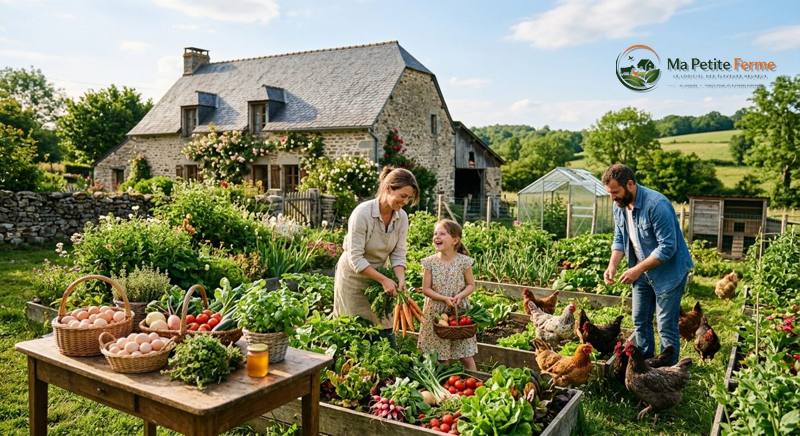
Family Food Self-Sufficiency: How to Grow the Essentials at Home
Discover how to achieve family food self-sufficiency through a vegetable garden, small livestock, and simple yet effective organization.
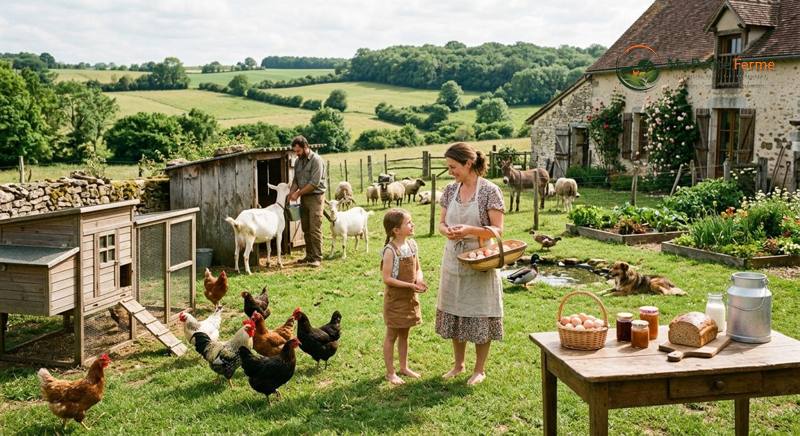
How Many Animals Do You Need to Achieve Family Self-Sufficiency?
Chickens, rabbits, goats or pigs: find out exactly how many animals you really need to feed your family all year long.
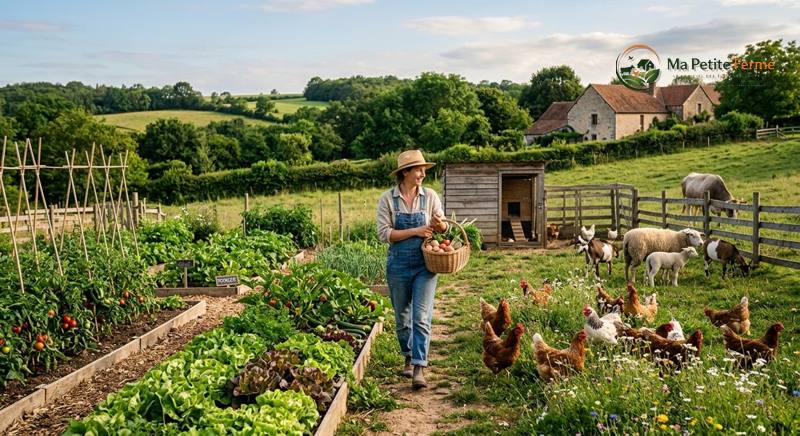
Vegetable Garden and Livestock Together: How to Organize a Productive and Harmonious Farm
Discover how to combine a vegetable garden and livestock on your farm to gain autonomy, reduce costs, and produce better.
Farms in our network — Food Self-Sufficiency at Home: How to Grow Your Own Food
Get our tips by email
Livestock, production and short-circuit selling — our best tips, no spam.