Managing pigs in summer: our tips for dealing with the heat
By La Rédaction — Ma Petite Ferme · 02/08/2026
Why is heat dangerous for pigs?
Pigs are particularly sensitive to intense heat. Unlike other species, they lack effective sweat glands and are therefore unable to regulate their body temperature by sweating. Their thermal comfort range lies between 15 and 25 °C. Above 30 °C, they rapidly enter a state of heat stress, which can lead to respiratory disorders, a drop in feed intake, reproductive problems and, in the most severe cases, death. For farmers operating in short supply chains, anticipating these risks is essential to preserve the health of their herd and the profitability of their farm.
Ensuring adequate hydration
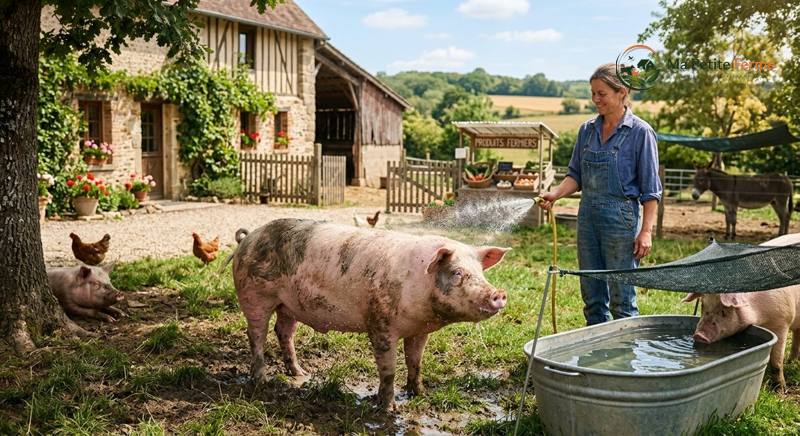
Water is undoubtedly the absolute priority during summer. An adult pig can consume up to 15 litres of water per day, and this need can double during heatwaves. Check several times a day that drinkers are clean, functional and well supplied. Favour cool water by placing tanks in the shade or insulating them from the sun. If possible, slightly cool the water without making it ice-cold, as this could cause a thermal shock. A dehydrated pig eats less, grows more slowly and becomes far more vulnerable to disease.
Creating shaded and cool areas
If your pigs live outdoors, it is essential to provide them with shaded shelters. Simple structures such as stretched tarpaulins, dense-leafed trees or wooden shelters are often enough to lower the perceived temperature by several degrees. Inside farm buildings, consider improving ventilation by opening high-level openings to encourage air circulation. Installing misters or fans can also bring notable relief during heat peaks. Avoid dark roofing materials that absorb and retain heat.
Adapting feed and feeding times
In intense heat, distribute meals early in the morning and late in the evening, when temperatures are cooler. Pigs naturally eat less when it is hot, but it is important that they consume enough nutrients to maintain their growth. You can slightly increase the energy density of the ration or offer wet feed to encourage intake. Avoid distributing fermented or spoiled feed, which deteriorates even more quickly in the heat.
Mud bathing: a natural ally
If your farming conditions allow it, give your pigs access to a mud area or a wet earth wallow. Rolling in mud is a natural behaviour that allows them to cool down and protect themselves from sunburn and insects. It is a simple gesture, at virtually no cost, that considerably improves their summer welfare. Good summer management also means knowing how to respect the animal's instinctive needs.
Related articles — Managing pigs in summer: our tips for dealing with the heat
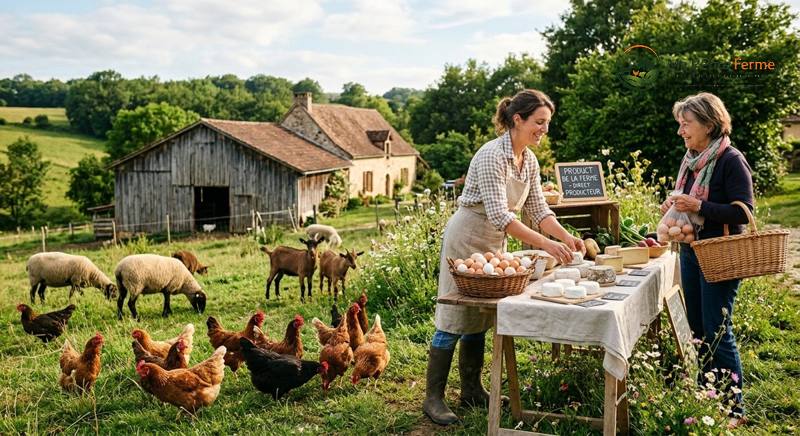
Farm Livestock Raising: A Complete Guide to Getting Started and Succeeding in Short Supply Chains
Discover how to start a profitable farm livestock operation, choose your animals, and successfully sell your production through short supply chains.
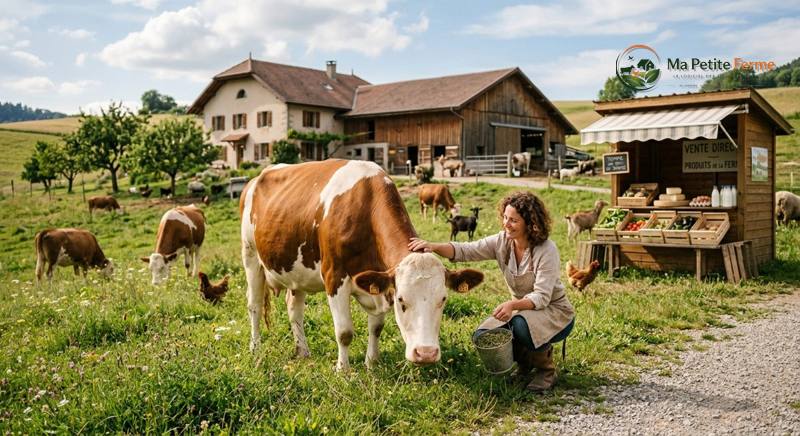
The Cow at the Heart of the Farm: Breeding, Welfare and Direct Sales
Discover everything you need to know about cows in farm breeding: breeds, feeding, animal welfare and short supply chain marketing.
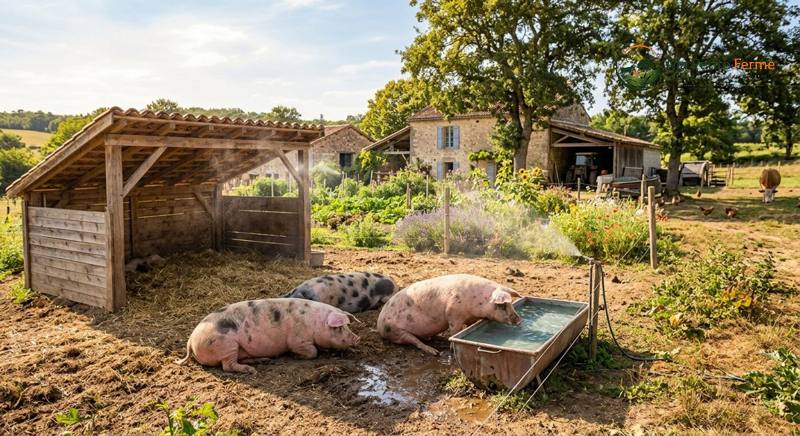
Summer tips for your pigs: managing heat effectively on the farm
Summer can be tough on your pigs. Discover our practical tips to protect them from the heat and ensure their well-being.
Farms in our network — Managing pigs in summer: our tips for dealing with the heat
Get our tips by email
Livestock, production and short-circuit selling — our best tips, no spam.