How Many Goats Do You Need to Be Self-Sufficient in Cheese?
By La Rédaction — Ma Petite Ferme · 11/08/2026
Self-sufficiency in goat cheese, an achievable goal
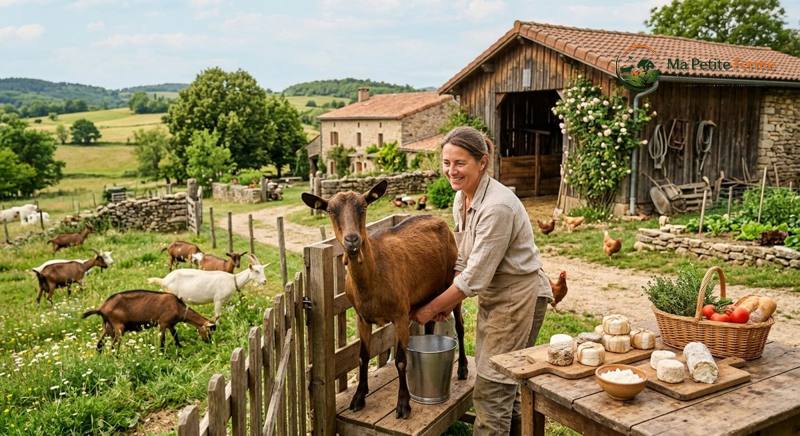
Many small producers and rural families dream of making their own goat cheese all year round. It is a realistic goal, provided you carefully calculate the number of animals needed based on your consumption, the breed chosen, and the type of cheeses you wish to make. Here are the key elements to help you see things clearly.
What milk production can you expect from a goat?
On average, a dairy goat of the Alpine or Saanen breed produces between 600 and 900 litres of milk per year over a lactation period of approximately 9 to 10 months. Hardy breeds such as the Poitevine or the Rove produce slightly less, between 400 and 600 litres, but offer richer milk in terms of fat content, which is ideal for cheese-making. You should count on approximately 5 to 6 litres of milk to produce 1 kg of fresh cheese, and up to 10 to 12 litres for an aged cheese with a drier texture, such as a crottin.
How much cheese does a family consume in a year?
A family of 4 who are heavy cheese consumers can easily reach 15 to 20 kg of goat cheese per year. Based on an average consumption of 15 kg per year and a yield of 8 litres of milk per kilogram of cheese (half fresh, half aged), approximately 120 litres of milk are needed per year. This corresponds to the production of a single goat over just a few months. In practice, 1 to 2 dairy goats are sufficient to cover the usual cheese-making needs of a family.
Why plan for a minimum of 2 to 3 goats?
Goats are highly social animals: a goat kept alone will quickly decline. It is therefore essential to keep at least two. Furthermore, lactation periods are not continuous: after kidding (generally in winter or spring), milk production stops for a few weeks. By keeping 2 to 3 goats with staggered kidding dates, you spread production throughout the year and avoid shortages. For comfortable self-sufficiency, 3 goats represent the right balance between regular production, herd management, and variety in the cheeses made.
What if you wish to sell through short supply chains?
If your goal goes beyond family consumption and you are considering selling your cheeses at the farm or at local markets, the figures change dramatically. To market a regular production, you should plan for a herd of at least 10 to 15 goats, which represents between 6,000 and 10,000 litres of milk per year and an annual production that can exceed 800 kg of cheese. At this scale, registration as a farm producer and compliance with health and safety standards become mandatory.
Conclusion: start small, but think sustainably
For family self-sufficiency in cheese, 2 to 3 well-chosen and well-managed goats are more than enough. Favour breeds suited to your region, invest in simple but clean cheese-making equipment, and train yourself in the basics of cheese production. You will quickly be rewarded with flavourful, homemade cheeses, along with the pride of a job well done.
Related articles — How Many Goats Do You Need to Be Self-Sufficient in Cheese?
Living Self-Sufficiently: The Guide for Small Producers Starting Out
Discover how to achieve food self-sufficiency on your farm through concrete strategies tailored to small rural producers.
Laying Hens: The Best Breeds for Profitable Short Supply Chain Farming
Discover which laying hen breeds to choose to maximize your egg production and attract customers through direct sales.
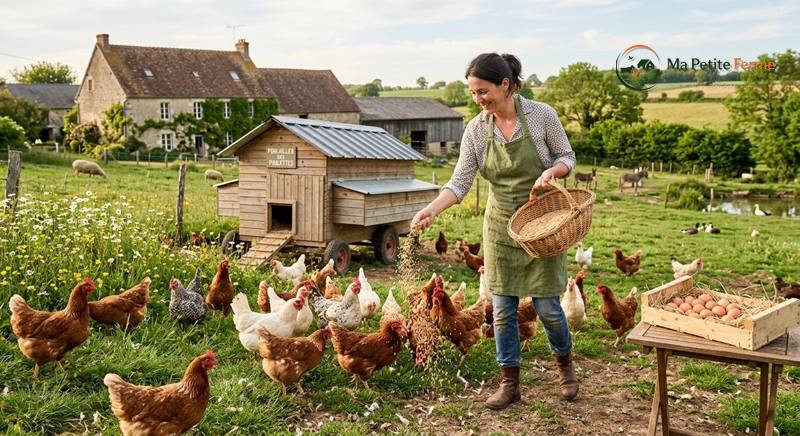
Free-range laying hen farming: what does it really cost?
Discover the real cost of free-range laying hen farming: investments, ongoing expenses and return on investment for small-scale producers.
Farms in our network — How Many Goats Do You Need to Be Self-Sufficient in Cheese?
Get our tips by email
Livestock, production and short-circuit selling — our best tips, no spam.