
How to get a hen to lay eggs quickly: our breeders' tips
By La Rédaction — Ma Petite Ferme · 02/08/2026

Understanding the natural laying cycle of hens
Before trying to boost egg production, it is essential to understand how the natural laying cycle of your laying hens works. A hen generally begins to lay between 18 and 22 weeks of age depending on the breed. The duration of daylight plays a key role: ideally 14 to 16 hours of light per day are needed to trigger and maintain regular laying. Below this threshold, ovulation naturally slows down. This is why production drops in winter and picks up again in spring.
Nutrition, the cornerstone of abundant egg production
A balanced diet is the first lever to act on. Your hens must receive a daily ration rich in protein (approximately 16 to 18%), calcium and essential amino acids such as methionine and lysine. Offer them a complete layer feed in pellet form, supplemented by crushed oyster shells available ad libitum to strengthen shell hardness. Avoid excess corn alone, which unbalances the ration and reduces laying. Leftover green vegetables, sprouted seeds or a few mealworms make excellent natural supplements that hens greatly appreciate.
Artificial lighting to stimulate laying in winter
If you wish to maintain or trigger laying outside the favourable season, you can use artificial lighting in the henhouse. Install a low-wattage LED bulb (10 to 15 watts is sufficient) set on a timer to switch on in the morning before dawn. The goal is to reach the well-known threshold of 14 hours of daily light. Be careful, however, to gradually increase the lighting duration by 15 minutes per week, so as not to stress the animals. This technique, commonly used in reasoned small-scale farming, makes it possible to smooth out production throughout the year.
Reducing stress for happy and productive hens
Stress is the number one enemy of egg laying. A sudden change of location, the introduction of new birds into the flock, the presence of predators or simply an overly noisy henhouse can halt production for several days or even several weeks. Make sure to provide your hens with a calm, clean and secure environment. Plan for at least one nest box for every four to five hens, placed in a dark and quiet spot. The litter must be dry, thick and renewed regularly.
Choosing the right laying breeds
Some breeds are naturally more productive than others. If your goal is a high production volume, look towards well-known breeds such as the White Leghorn, the Sussex, the Marans or the Rhode Island Red. These hens can produce between 250 and 300 eggs per year under good conditions. Conversely, so-called ornamental breeds lay far fewer eggs. Consult your local hatchery or breeder to choose the breed best suited to your farming project.
Monitoring flock health
Finally, a hen that has stopped laying may simply be ill, affected by parasites or going through a moult. Inspect your animals regularly, treat them against internal and external parasites, and consult a veterinarian if the drop in laying affects a large portion of the flock. Rigorous health monitoring is the foundation of a healthy and profitable small-scale farming operation.
Related articles — How to get a hen to lay eggs quickly: our breeders' tips
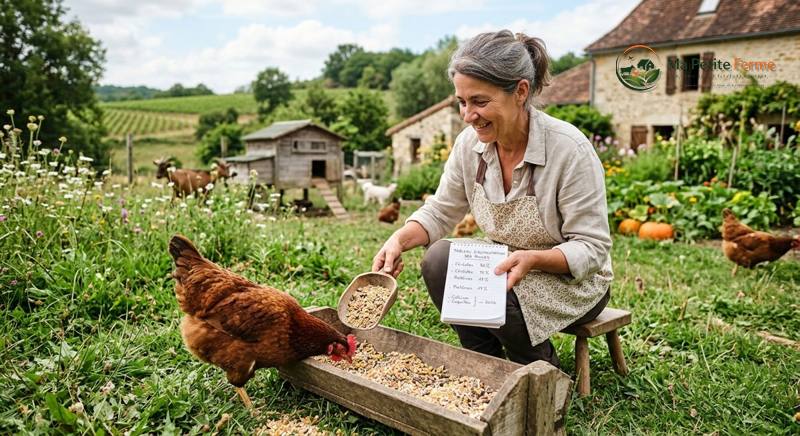
Feeding chart for laying hens: everything you need to know
Discover our complete laying hen feeding chart to optimize egg production and the health of your flock.
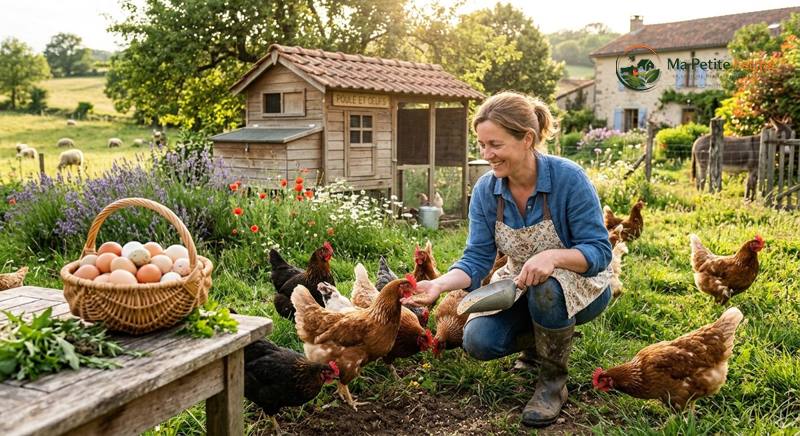
Laying hens: everything small-scale producers need to know to succeed in their farming
Discover our practical tips for raising laying hens in short supply chains: breed selection, feeding, animal welfare and on-farm sales.
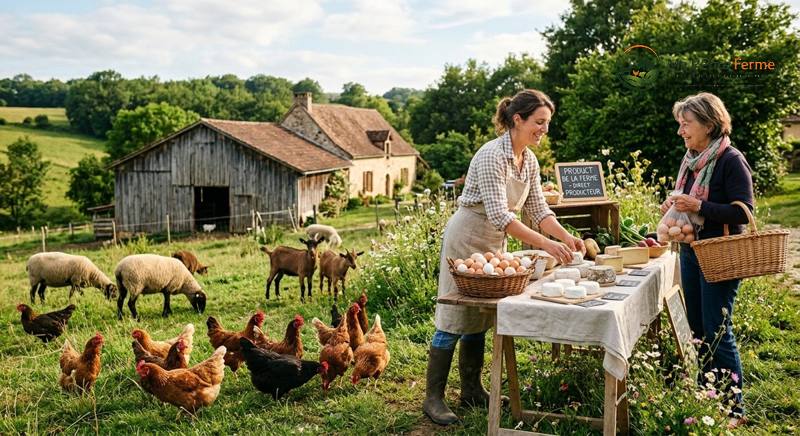
Farm Livestock Raising: A Complete Guide to Getting Started and Succeeding in Short Supply Chains
Discover how to start a profitable farm livestock operation, choose your animals, and successfully sell your production through short supply chains.
Farms in our network — How to get a hen to lay eggs quickly: our breeders' tips

Get our tips by email
Livestock, production and short-circuit selling — our best tips, no spam.