Feeding chart for laying hens: everything you need to know
By La Rédaction — Ma Petite Ferme · 02/08/2026
Why feed your laying hens properly?
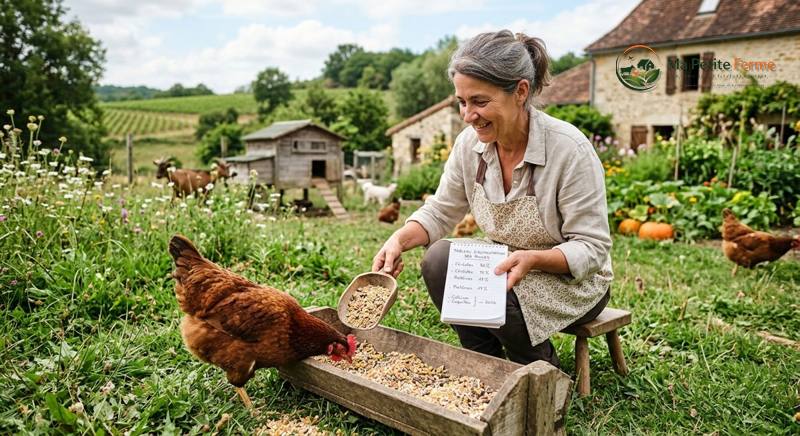
Nutrition is the cornerstone of egg production in farm-raised poultry. A healthy laying hen can produce up to 300 eggs per year, but only if her nutritional needs are fully met. A deficit in protein, calcium, or vitamins quickly results in a drop in egg production, fragile shells, or health problems. Before consulting the feeding chart, keep in mind that every ration must be adapted to the age, season, and production stage of your flock.
Nutritional requirements chart for laying hens
Here is a reference chart to cover the daily needs of an adult laying hen (approximately 1.8 to 2.2 kg):
- Complete feed: 120 to 130 g per day
- Protein: 15 to 17% of the ration (i.e. 18 to 22 g)
- Calcium: 3.5 to 4 g per day (oyster shells available free choice)
- Phosphorus: 0.35 to 0.45% of the ration
- Energy: 270 to 290 kcal of metabolizable energy
- Water: 200 to 250 ml per day (ad libitum, clean and fresh water)
These values provide a solid foundation for any beginner or experienced poultry keeper looking to structure their feed management in a rigorous way.
The different feeding phases according to age
The diet of a laying hen evolves throughout her life. During the 0 to 6 weeks phase (chick stage), protein requirements are high, between 18 and 20%. From 7 to 18 weeks (pullet stage), a grower feed with 14 to 16% protein is used, with reduced calcium to avoid overloading the kidneys. From the onset of laying (around 18 to 20 weeks), the switch is made to a layer feed rich in calcium to ensure shell strength.
Natural supplements and foods to avoid
In farm-raised poultry keeping, it is common to enrich the ration with natural foods. Cooked vegetable peelings, whole grains of corn or wheat, fresh herbs, and insects make excellent supplements. On the other hand, certain foods must be strictly avoided: avocado, raw onion, large quantities of citrus fruits, uncooked meat scraps, and excess salt are toxic to hens.
Practical tips for short supply chain producers
For producers who sell their eggs through direct sales, the quality of the feed is a genuine commercial asset. Focusing on locally sourced grains, sprouted seeds, or aromatic herb supplementation can make a real difference in the eyes of your customers. Also consider displaying your feeding practices on your labels or market stall: transparency builds trust and fosters customer loyalty.
Related articles — Feeding chart for laying hens: everything you need to know
Which laying hen breed should you choose to maximize production?
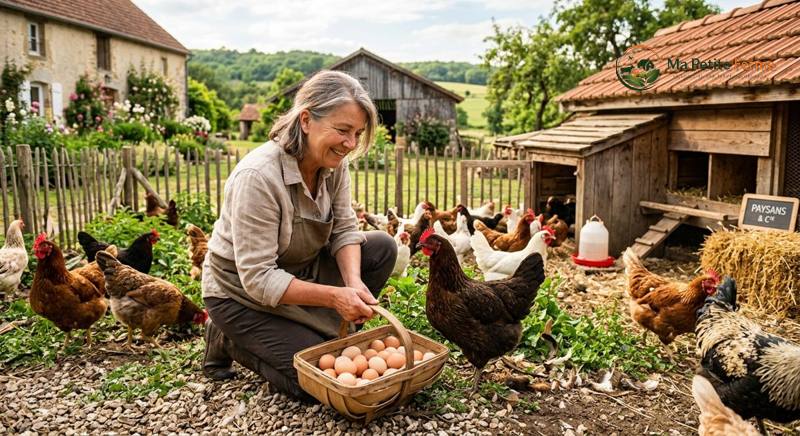
Discover the best laying hen breeds to optimize your egg production in farm poultry keeping and make the right choices for your situation.
Which laying hen breed should you choose for your farm?
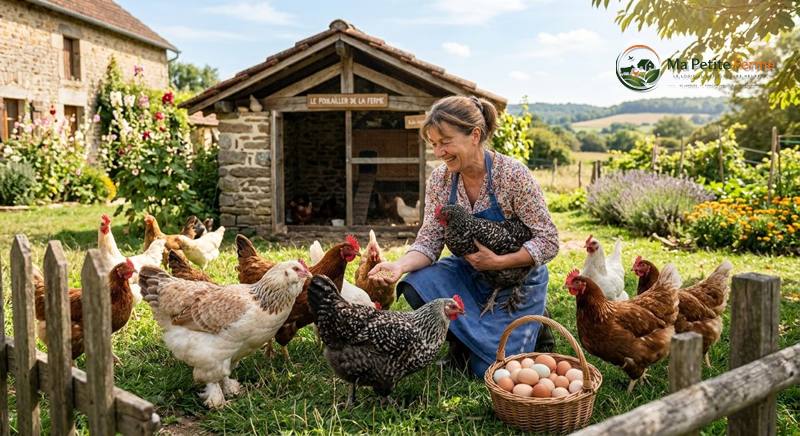
Discover how to choose the best laying hen breed based on your needs, land, and short supply chain production goals.
Spent laying hens: everything you need to know before buying
Buying spent laying hens can be a great deal… if you know what you're doing. Discover our tips before you take the plunge.
Farms in our network — Feeding chart for laying hens: everything you need to know
Get our tips by email
Livestock, production and short-circuit selling — our best tips, no spam.