
Summer Tips for Pigs: How to Protect Your Animals from the Heat
By La Rédaction — Ma Petite Ferme · 02/08/2026
Why do pigs suffer particularly from heat?
Unlike other farm animals, pigs have virtually no sweat glands. They are therefore unable to regulate their body temperature through sweating. Once the thermometer exceeds 25°C, your animals can suffer from heat stress, which affects their growth, appetite, and reproduction. As a producer, it is essential to anticipate extreme heat in order to preserve the welfare of your herd and the profitability of your operation.
Ensuring permanent access to fresh water
Hydration is the number one priority in summer. An adult pig can consume up to 15 litres of water per day, and this need increases considerably as temperatures rise. Check twice a day that the drinkers are working properly and that the water is clean and fresh. Consider flushing the pipes early in the morning to prevent stagnant water from becoming too warm. If possible, install additional watering systems to avoid competition between animals.
Creating shade and improving ventilation
Shade is essential for pigs raised outdoors or in semi-open buildings. Trees, shade nets, or wooden shelters can help reduce direct sun exposure. In closed buildings, optimise natural ventilation by opening doors and windows during the coolest hours, early in the morning and in the evening. Fans and misting systems can also make a significant difference in lowering the ambient temperature by several degrees.
Mud, a natural ally for your pigs
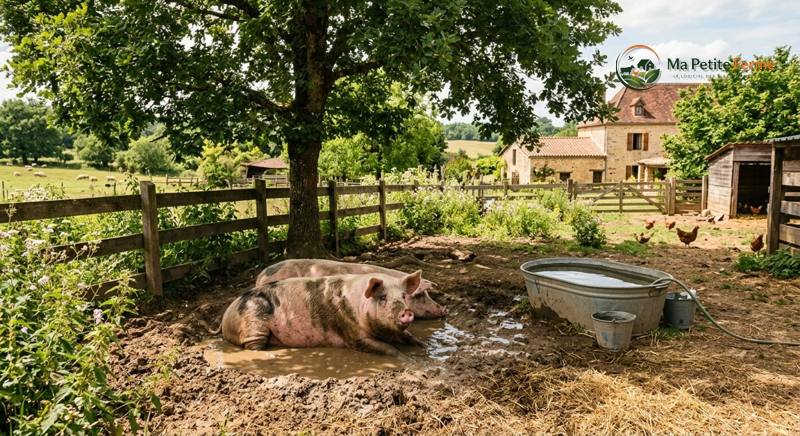
Allowing your pigs to wallow in mud is not merely a whim: it is a natural behaviour essential to their thermoregulation. As wet mud evaporates, it cools their skin and also protects them from sunburn and insects. If you practise outdoor farming, set up a pond or a mud area in the shade. Replenish it regularly with clean water to maintain a pleasant and hygienic texture.
Adapting feeding practices during extreme heat
During heatwaves, pigs eat less and prefer to feed during the cooler hours. Adjust your feeding schedules by programming meals early in the morning and late in the evening. Favour wet feeds or supplements rich in electrolytes to compensate for mineral losses. Reduce the quantities distributed during peak heat to avoid fermentation in the troughs. A well-adjusted feeding plan helps maintain growth and avoid economic losses linked to heat stress.
Monitoring your animals' health on a daily basis
Be attentive to signs of heatstroke: excessive panting, prostration, reddish skin, or animals that refuse to get up. If heatstroke is suspected, gently spray the animal with lukewarm water (not cold) and contact your veterinarian. Careful daily monitoring will allow you to intervene quickly and protect your entire herd throughout the summer season.
Related articles — Summer Tips for Pigs: How to Protect Your Animals from the Heat
Laying hens in cages or free-range: what to choose for your farm?
Cage or free-range: discover the advantages, disadvantages and regulations to help you choose the right laying hen farming system.
Free-range laying hen farming: benefits, challenges and practical tips
Discover how to succeed in free-range laying hen farming: animal welfare, egg quality and concrete advice for small-scale producers.
Managing laying hens on a daily basis: practical tips for successful poultry farming
Discover how to care for your laying hens every day to ensure their well-being and maximize your egg production in short supply chains.
Farms in our network — Summer Tips for Pigs: How to Protect Your Animals from the Heat
Get our tips by email
Livestock, production and short-circuit selling — our best tips, no spam.