Do Goats Suffer from Heat? Tips to Protect Your Herd in Summer
By La Rédaction — Ma Petite Ferme · 03/08/2026
Goats and Heat: An Often Underestimated Sensitivity
Contrary to what one might think, goats are relatively sensitive animals when it comes to intense heat. While they tolerate high temperatures better than some other species, they remain vulnerable once the thermometer exceeds 30 to 32 °C. Heat stress can then impact their health, milk production, and overall well-being. As a small producer, it is essential to know how to recognize warning signs and act quickly.
Signs That Your Goats Are Suffering from the Heat
A goat experiencing heat stress will visibly change its behavior. It seeks shade, reduces its movements, pants, and may refuse to eat. A significant drop in milk production is often observed, sometimes accompanied by a change in its composition. In the most serious cases, severe dehydration can occur, posing health risks to the animal. Young kids and lactating goats are particularly vulnerable.
How to Protect Your Goats During Heat Waves
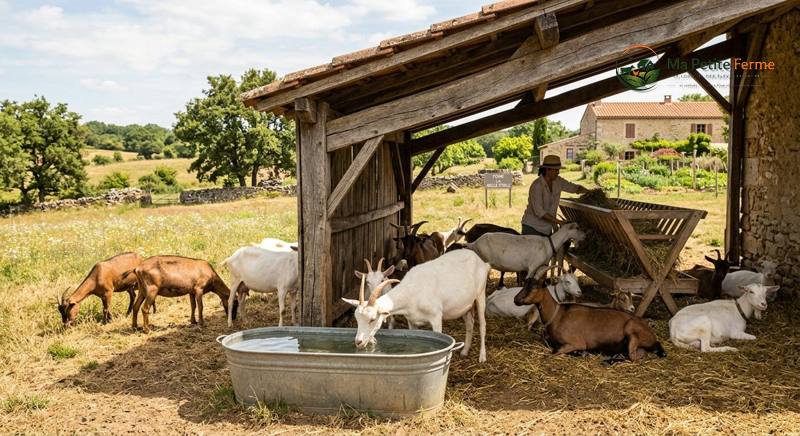
The first essential measure is to ensure permanent access to fresh, clean water. An adult goat can consume up to 10 liters of water per day during hot weather, or even more if she is lactating. Make sure to multiply watering points and regularly refresh the water to prevent it from warming up in the troughs.
Shade is equally crucial. Set up shaded areas large enough for the entire herd to shelter without crowding. Trees, tarps, or open shelters are effective and low-cost solutions. Also consider improving ventilation in your farm buildings by opening vents and installing fans if necessary.
Adapting Feeding and Farming Practices
In hot weather, prioritize distributing hay and concentrates during the coolest hours of the day, early in the morning or in the evening. This encourages animals to feed properly despite the heat. Also avoid moving or handling goats unnecessarily during the hottest hours of the day, in order to limit their stress.
A mineral supplement is also recommended, as perspiration leads to electrolyte losses. Salt licks or mineral supplements suited to goats can help compensate for these losses and maintain the balance of your animals.
Animal Welfare: An Asset for Your Short-Supply-Chain Farm
Taking care of your goats in summer also means enhancing your approach in the eyes of your customers. Consumers who buy directly from the farm are increasingly attentive to farming conditions. Showcasing your summer best practices builds trust and fosters customer loyalty. A healthy herd means quality production throughout the year.
Related articles — Do Goats Suffer from Heat? Tips to Protect Your Herd in Summer
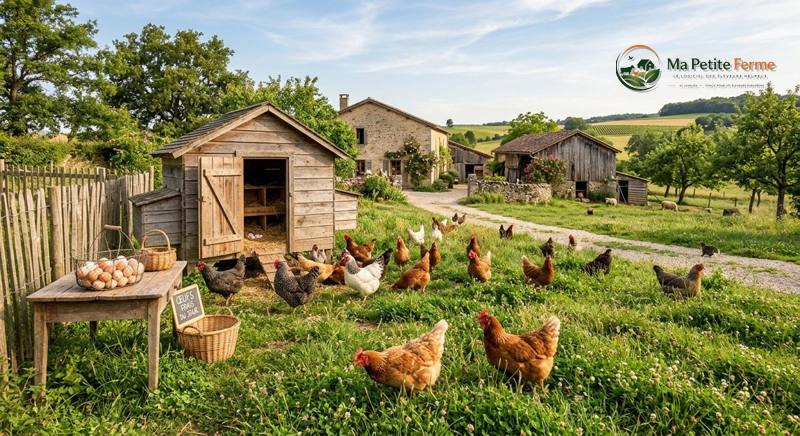
Laying hens in cages or free-range: what to choose for your farm?
Cage or free-range: discover the advantages, disadvantages and regulations to help you choose the right laying hen farming system.
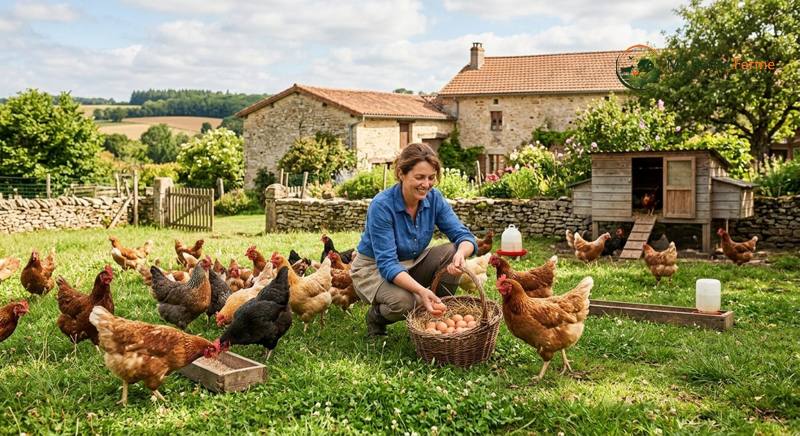
Free-range laying hen farming: benefits, challenges and practical tips
Discover how to succeed in free-range laying hen farming: animal welfare, egg quality and concrete advice for small-scale producers.
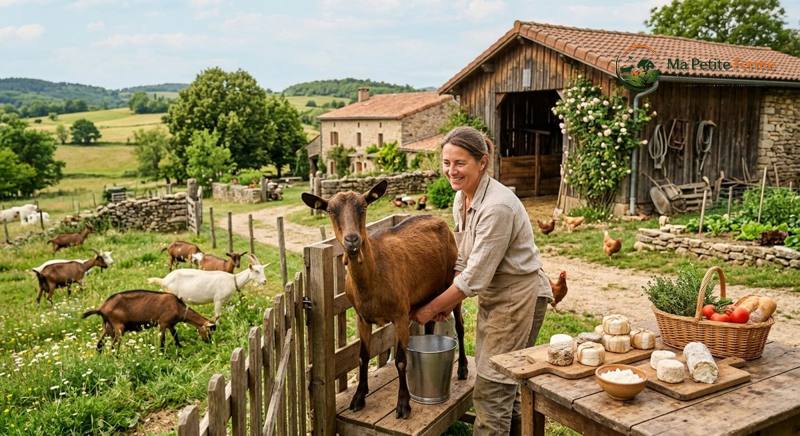
How Many Goats Do You Need to Be Self-Sufficient in Cheese?
Find out how many goats you need to produce enough cheese year-round and achieve cheese self-sufficiency on your farm.
Farms in our network — Do Goats Suffer from Heat? Tips to Protect Your Herd in Summer
Get our tips by email
Livestock, production and short-circuit selling — our best tips, no spam.