Direct sales at the organic farm: what really changes compared to conventional
By La Rédaction — Ma Petite Ferme · 07/10/2026
The organic label: a commitment that goes beyond simple certification
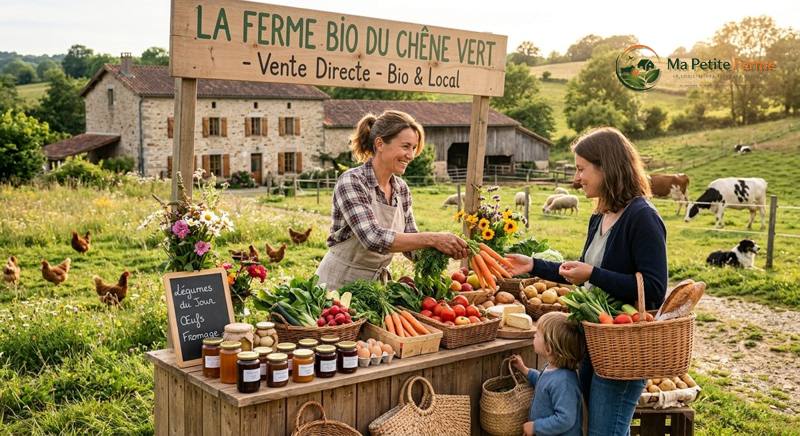
Choosing to sell directly on the farm under organic farming means embracing a comprehensive philosophy that transforms every aspect of your operation. Contrary to what one might think, the difference from conventional farming is not limited to the absence of synthetic pesticides. It touches your relationship with the soil, your animals, your customers, and even your communication. Understanding these concrete changes will help you prepare better and value your work at its true worth.
Agricultural practices rethought from the ground up
In conventional farming, the production logic often relies on chemical inputs to optimise yields. In organic farming, you work with living systems: crop rotation, organic fertilisers, managed ground cover, and promoted biodiversity. For livestock, this involves strict specifications: mandatory access to open air, certified organic feed, and limited allopathic veterinary treatments. These constraints require greater observation, expertise, and patience. But they produce goods whose flavour and nutritional quality is often far superior — a powerful selling point in short supply chains.
Organic certification: an administrative process to anticipate
The major administrative difference lies in mandatory certification by an accredited body such as Ecocert, Bureau Veritas, or Certipaq. Unlike conventional farming, you will need to compile a dossier, undergo an annual inspection, and pay a membership fee. The conversion period — two or three years depending on the type of production — is a delicate phase during which you bear the constraints of organic farming without being able to display the AB logo. Anticipate this period in your cash flow plan: it is often the most financially challenging time.
A radically different pricing and customer positioning
In conventional direct sales, competition often centres on price. In organic farming, you enter into a relationship of trust with a convinced and loyal customer base, willing to pay a fair price for traceable and ethical products. Your buyers want to understand your practices, visit the farm, and know your animals by name. This closeness is an immense asset: it reduces your need to spend on advertising and naturally generates powerful word of mouth. Invest in transparency, tell your story on social media or your website, and organise open days.
Communication and signage governed by regulations
In organic farming, the use of the AB logo and the European logo (green leaf) is regulated. You may only display them on fully certified products. All communication must be rigorous to avoid accusations of greenwashing, which are now severely penalised. In conventional farming, you have greater freedom of expression. In organic farming, every claim must be verifiable. This is a constraint, but it is also what builds the long-term credibility of your brand.
A greater human and financial investment, for a different kind of profitability
An organic farm operating through short supply chains requires more labour, more time per animal or per plot, and sometimes specific equipment. Profitability is built differently: over time, through customer loyalty and moving upmarket. Specific subsidies are available, notably conversion and organic maintenance aids within the framework of the CAP. Contact your local chamber of agriculture to build a solid and realistic project.
Related articles — Direct sales at the organic farm: what really changes compared to conventional
Finding laying hens for sale near you: the right reflexes before buying
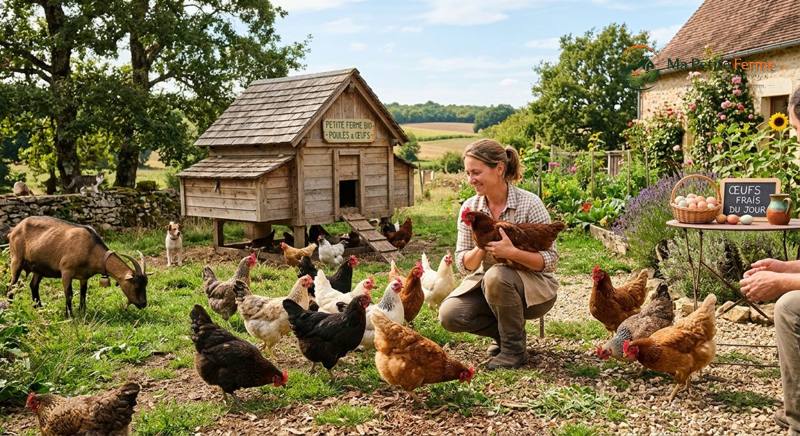
Looking for laying hens close to home? Discover our practical tips for buying healthy poultry and choosing the right local breeder.
Laying hens: how to set the right selling price depending on your region
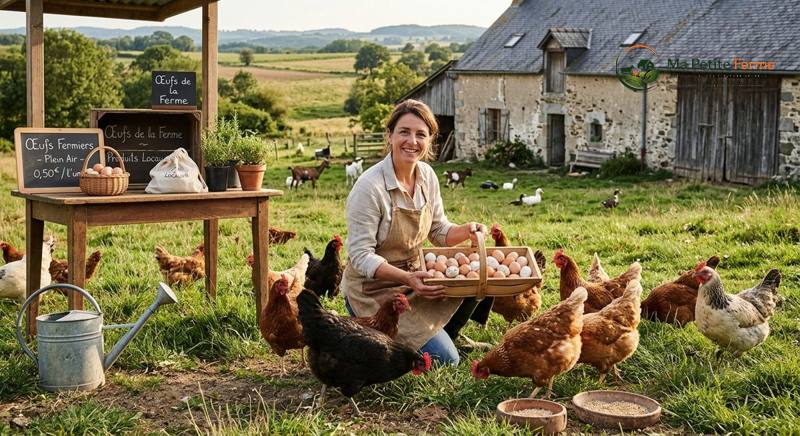
Setting the price for your laying hens is not an exact science, but with the right methods, you will sell at the fair price anywhere in France.
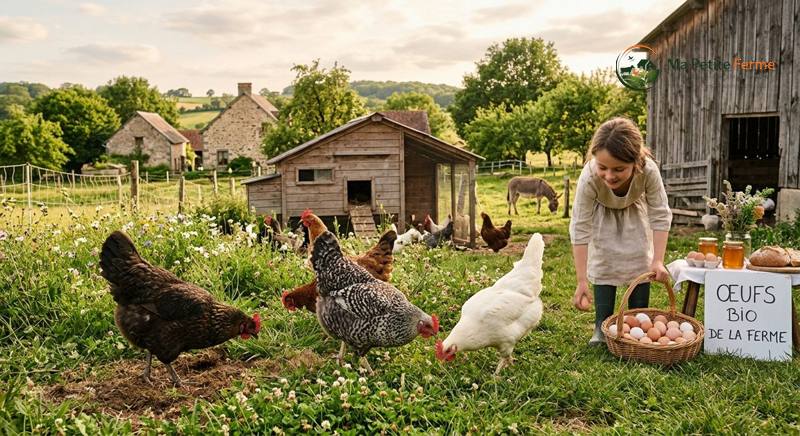
Marans, Sussex, Leghorn: which breed lays the most in free range?
Marans, Sussex or Leghorn: find out which hen is the best free-range layer to optimise your farm production.
Farms in our network — Direct sales at the organic farm: what really changes compared to conventional
Get our tips by email
Livestock, production and short-circuit selling — our best tips, no spam.